
Adding plants to your home can bring life, color, and freshness to any space. However, the right plant pots and planters play a big role in making plants thrive and improving your home decor. Choosing the wrong pot can affect your plant's growth or make your room look unorganized.
This guide will help you understand how to select the perfect plant pots and planters for your home in a simple, easy-to-understand way.
Understand the Purpose of Your Plant Pots

Before buying any pots or planters, you need to know why you want them.
Decorative Purpose
Some plant pots are chosen mainly to improve home decor. They should match the style of your room, whether it's modern, traditional, or minimalist. Decorative planters can add a pop of color or texture to your space.
Functional Purpose
Other plant pots are meant to support plant growth. These pots focus on drainage, size, and durability. Knowing the purpose helps you choose pots that balance both beauty and functionality.
Choose the Right Size for Your Plants
Size is one of the most important factors when choosing plant pots.
Small vs. Large Pots
Small plants like succulents or herbs need smaller pots, while tall plants or trees need larger ones. Using the correct size allows roots to grow properly and prevents overwatering or stunted growth.
Depth and Width
Consider both the depth and width of the pot. Deeper pots are suitable for plants with long roots, while wider pots are good for spreading plants. A pot that is too small may restrict growth, and a pot that is too large may cause water logging.
Select the Right Material for Plant Pots
Plant pots come in different materials, each with its benefits and style.
Plastic Pots
Plastic pots are lightweight, affordable, and easy to move. They retain water well, making them ideal for plants that need regular moisture.
Ceramic and Clay Pots
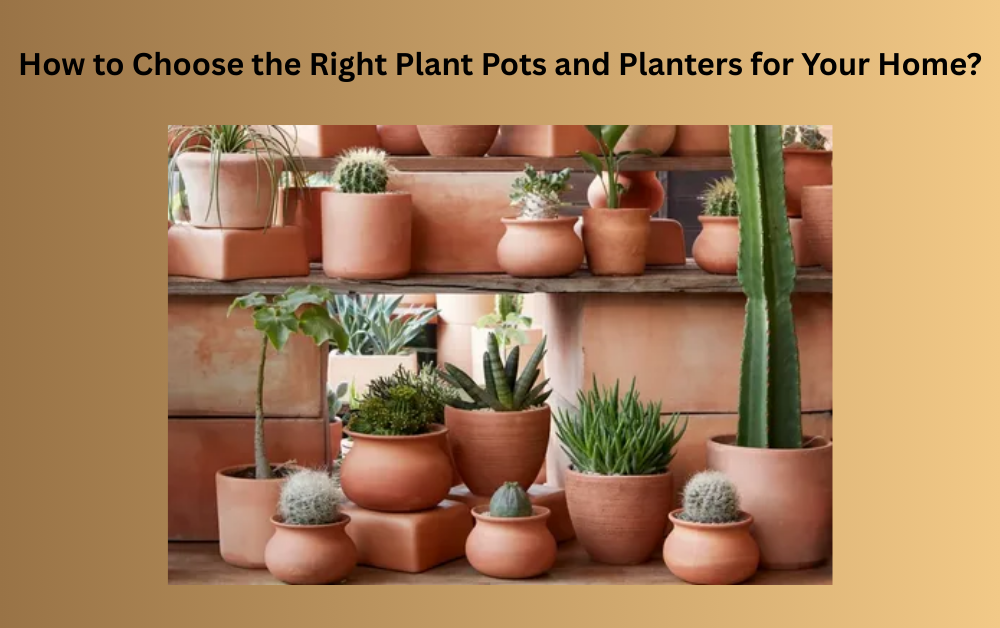
Ceramic and clay pots are stylish and add a decorative touch. They are porous, which helps with air circulation and prevents overwatering. However, they are heavier and need careful handling.
Metal and Wooden Planters
Metal and wooden planters can add a modern or rustic look to your home. Metal pots are durable, while wooden planters give a natural feel. Make sure metal pots are coated to prevent rust and wooden pots are treated to resist moisture.
Check for Drainage Options
Proper drainage is crucial for healthy plants.
Drainage Holes
Always choose pots with drainage holes at the bottom. Excess water can escape, preventing root rot and keeping plants healthy.
Saucer or Tray
If the pot has a saucer or tray, it can collect extra water and protect your furniture from damage. This is especially important for indoor plants.
Consider Your Home Décor Style
The style of your plant pots should match your home’s décor.
Color and Finish
Choose colors that complement your room. Neutral tones work well for minimalist décor, while bright colors can add a playful touch. Glossy or matte finishes can also change the overall look.
Shape and Design
Round, square, or geometric-shaped pots can enhance your space. Decorative planters with patterns or textures can also serve as statement pieces in your home.
Think About Placement in Your Home
Where you place your plants affects the type of pot you need.
Indoor Placement
Indoor plants may need lighter pots for easy movement and pots with trays to avoid water spills. Consider window sills, shelves, or corners for proper sunlight and air circulation.
Outdoor Placement
Outdoor pots must withstand weather conditions like sunlight, rain, and wind. Durable materials like clay, metal, or treated wood work best for patios, balconies, or gardens.
Focus on Plant Type and Needs
Different plants have different requirements.
Succulents and Cacti
Succulents and cacti prefer shallow pots with good drainage. They do not need frequent watering, so the pot should allow water to dry quickly.
Flowering Plants
Flowering plants often need slightly bigger pots to support root growth. They may require more water, so ensure the pot retains some moisture without waterlogging.
Tall or Bushy Plants
Tall or bushy plants need larger, heavier pots to prevent tipping over. Wide and stable bases are ideal for these plants.
Consider Maintenance and Cleaning
Plant pots need occasional cleaning to look fresh and maintain plant health.
Easy-to-Clean Materials
Plastic, ceramic, and metal pots are easy to wipe or wash. Choose materials that suit your lifestyle and cleaning routine.
Removable Liners
Some planters come with removable liners, making it easier to water and clean plants without disturbing them.
Buy Plant Pots in Sets or Bulk
Buying multiple pots at once can be convenient and cost-effective.
Matching Sets
Matching sets of pots create a uniform look in your home. You can use them in living rooms, kitchens, or outdoor spaces for a coordinated style.
Bulk Options for Large Spaces
If you have many plants or a large garden, buying in bulk saves money and ensures you get the same style and quality across all pots.
Final Thoughts on Choosing Plant Pots and Planters
Choosing the right plant pots and planters is more than just picking something that looks nice. Consider size, material, drainage, placement, plant type, and style. Balancing functionality and aesthetics ensures your plants thrive and your home looks beautiful.
By following these simple steps, you can confidently select plant pots and planters that suit your plants, match your decor, and make your home feel fresh and lively. A well-chosen pot can enhance both your plant's growth and your home's overall style.
For more insightful articles related to this topic, feel free to visit: social.mparaki.gr

 Arabic
 French
 Spanish
 Portuguese
 Deutsch
 Turkish
 Dutch
Dutch
 Italiano
 Russian
 Romaian
 Portuguese (Brazil)
 Greek
Greek