
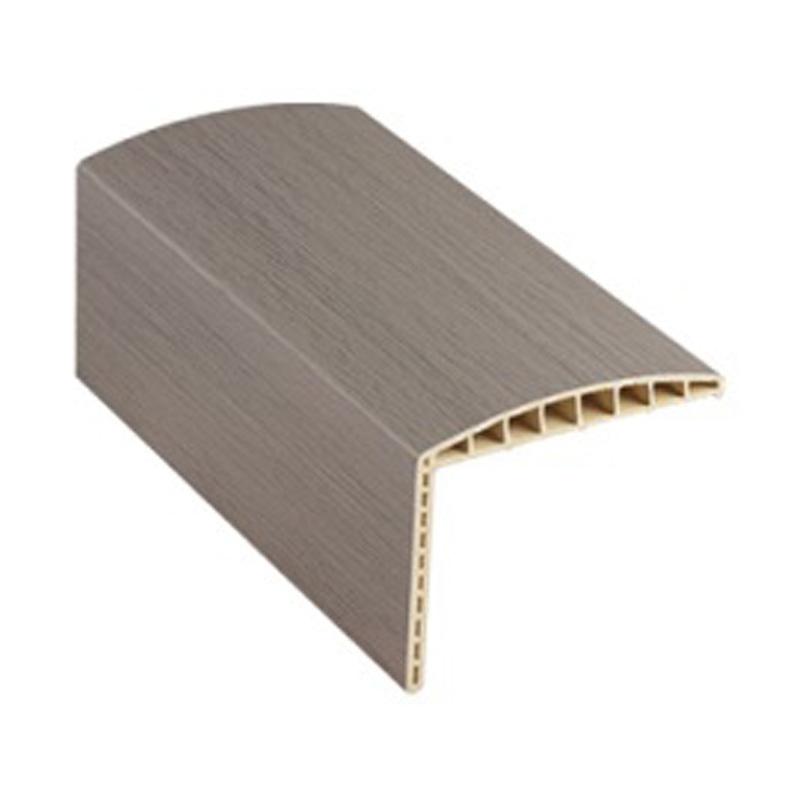
A WPC Door Factory specializes in manufacturing doors from wood-plastic composite, a hybrid material combining wood fibers or flour with thermoplastic resins. The production process begins with precise formulation, where sawdust, rice husks, or other lignocellulosic fillers are dried and blended with polyvinyl chloride, polyethylene, or polypropylene at controlled ratios. Coupling agents enhance bonding between hydrophilic wood particles and hydrophobic polymers, while additives including lubricants, stabilizers, and pigments ensure consistent processing and desired coloration. This compounded material is fed into parallel twin-screw extruders operating at specific temperature profiles, where it is melted, homogenized, and forced through calibrated dies that shape the door profile. The continuous extrusion method enables WPC Door Factory operations to produce hollow or solid core door slabs with consistent density and dimensional accuracy.
Following extrusion, the formed door slabs undergo controlled cooling in long calibration tables to maintain flatness and prevent warping. Cutting stations trim edges to precise dimensions, while CNC machining centers create hinge pockets, lock recesses, and hardware preparations with high positional accuracy. Surface finishing represents a distinctive capability of the WPC Door Factory. Unlike traditional wood doors requiring multiple coating applications, WPC doors may receive direct lamination with decorative foils or thermofoil membranes that bond permanently to the composite substrate under heat and vacuum pressure. These finishes replicate wood grains, abstract patterns, or solid colors with notable fidelity while providing enhanced moisture resistance. Edge banding operations apply matching PVC or ABS strips to exposed edges, creating a seamless appearance.
Quality control throughout the WPC Door Factory emphasizes dimensional stability, surface integrity, and physical properties. Samples undergo moisture content analysis, density verification, and mechanical testing for screw withdrawal resistance and impact strength. The inherent moisture resistance of the wood-plastic composite, combined with precise manufacturing controls, enables WPC Door Factory products to perform reliably in environments where traditional wood doors would experience swelling, warping, or decay, making them particularly suitable for bathrooms, kitchens, and coastal applications.

 English
 Arabic
 French
 Spanish
 Deutsch
 Turkish
 Dutch
Dutch
 Italiano
 Russian
 Romaian
 Portuguese (Brazil)
 Greek
Greek