
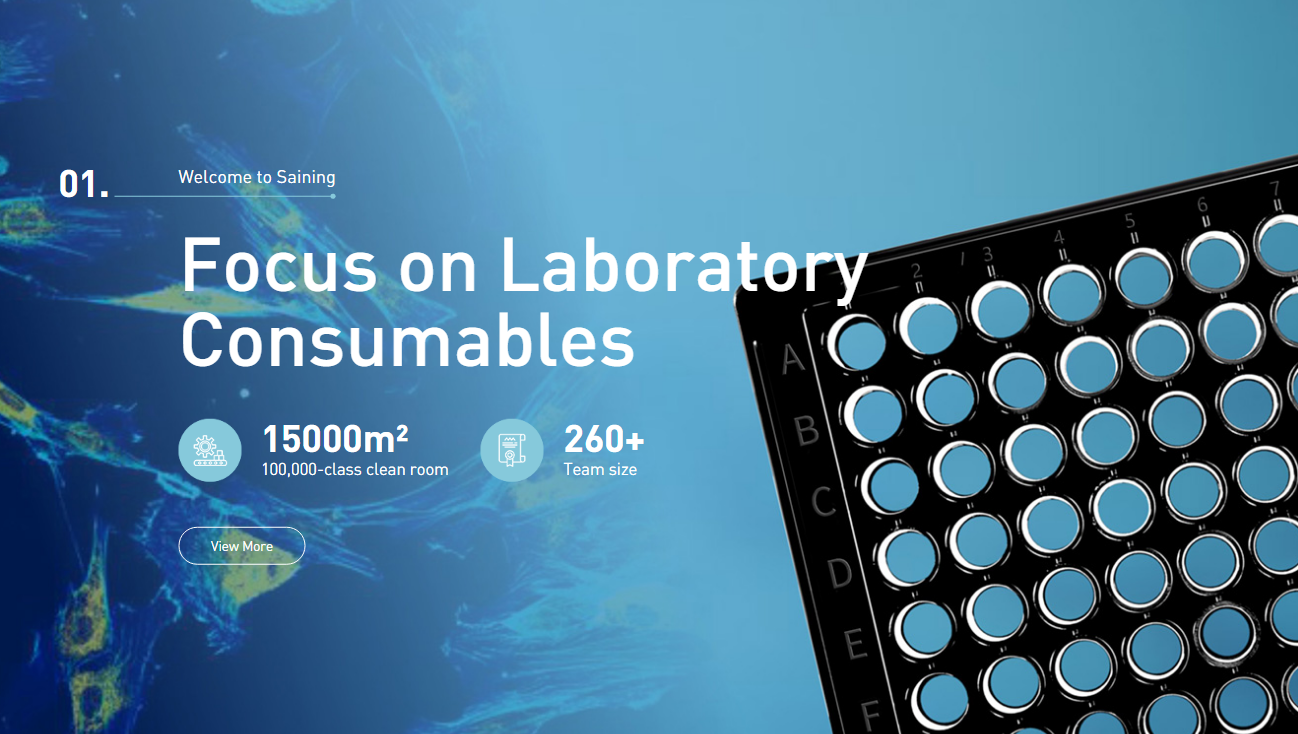
Evaporation and environmental fluctuations are frequent topics of discussion among scientists who work with high-throughput formats like Cell Culture Plate(96 Well). Because each well holds only a tiny volume of media, even minor temperature shifts or humidity changes can lead to significant differences in cell conditions or assay readings across the plate.
One commonly discussed mitigation strategy is to fill perimeter wells with sterile water or buffer when they do not contain experimental samples. Although these wells are technically part of the plate, filling them acts as a humidity buffer that reduces evaporation from interior test wells, stabilizing conditions during incubation.
Another recommendation is to limit how often incubator doors are opened during culture experiments. Rapid changes in ambient temperature and humidity can disturb steady state conditions within a culture or assay setup. Some researchers also use specialized plate lids that minimize evaporation while still permitting adequate gas exchange—a balance that is particularly important for long-term incubations in both cell culture and ELISA Plate assays.
Researchers also emphasize that pay attention to media selection and incubation environment calibration before beginning a large experiment. A stable external environment simplifies interpretation of biological responses and reduces the likelihood that external variables confound your results.
By paying careful attention to setup techniques and environmental control, even small details can meaningfully improve experimental consistency when working with 96-well platforms.

 English
 Arabic
 French
 Spanish
 Portuguese
 Deutsch
 Turkish
 Dutch
Dutch
 Italiano
 Russian
 Romaian
 Portuguese (Brazil)