
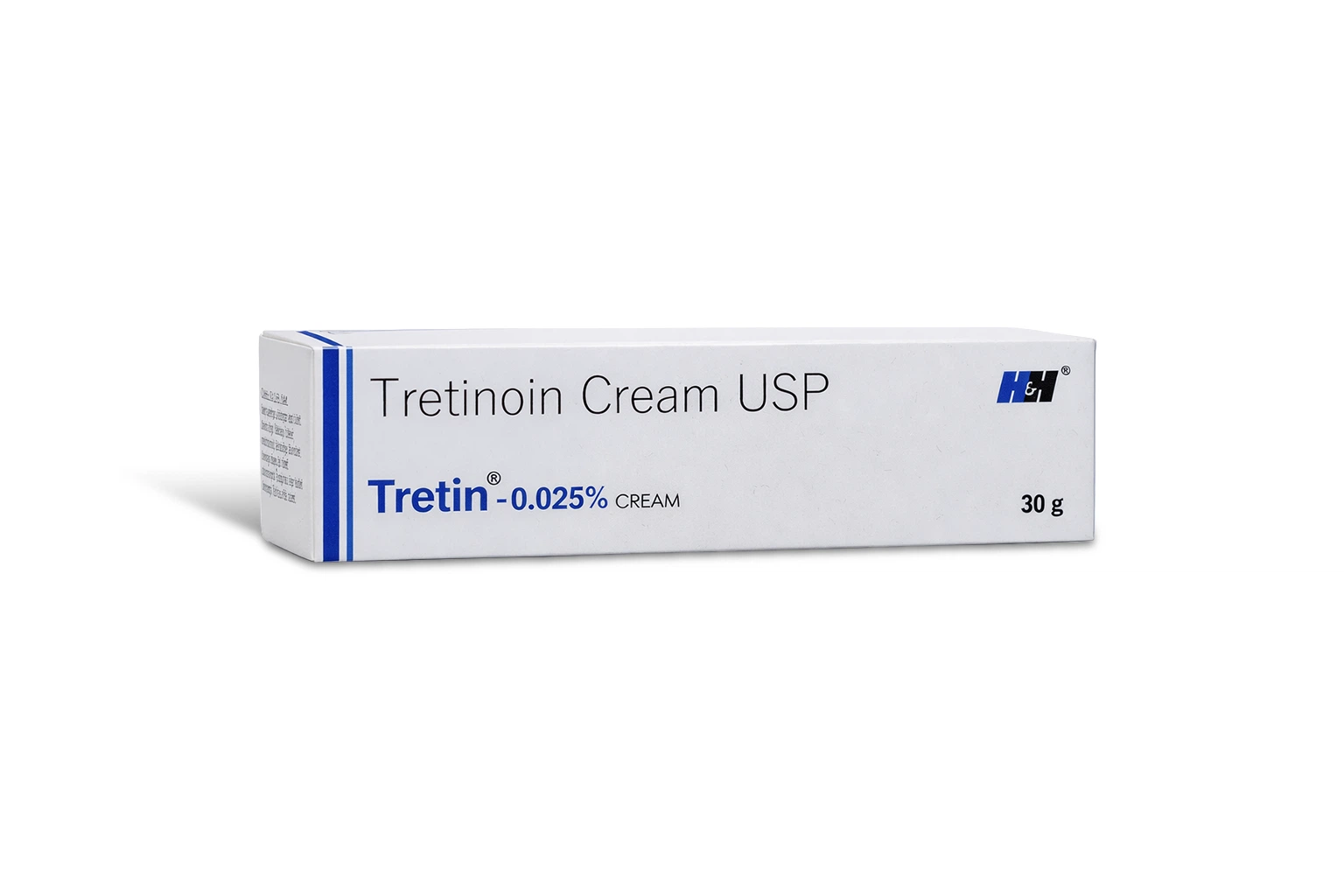
If you’ve been researching skincare in the USA lately, you’ve probably heard some conflicting things about Tretinoin. One person calls it a "miracle in a tube," while another warns that it "thinned their skin" or "ruined their barrier."
Because Tretin 0.025% Cream is a medical-grade treatment, it’s surrounded by myths that can make beginners nervous. Today, we’re setting the record straight with science-backed facts so you can start your journey with confidence.
Myth 1: "Tretinoin thins the skin."
The Fact: This is the most common misconception. While Tretinoin thins the stratum corneum (the very top layer of dead, dull skin cells), it actually thickens the deeper layers of the skin (the dermis). By stimulating collagen production, Tretinoin makes your skin firmer, bouncier, and more resilient over time. It doesn't make skin fragile; it makes it structurally younger.
Myth 2: "You can't use it in the summer."
The Fact: You absolutely can. Tretinoin is not "phototoxic," meaning it doesn't react with light to cause a rash. However, because it brings fresh, new skin to the surface, that skin is more prone to sunburn. As long as you are diligent with an SPF 30+ during the day, you can maintain your Tretin routine year-round—even in the sunniest parts of the US.
Myth 3: "A higher percentage means better results."
The Fact: In a landmark 48-week study, researchers found that 0.025% and 0.1% strengths produced statistically similar anti-aging results. The only major difference? The 0.1% group experienced significantly more redness and peeling. For long-term skin health, the 0.025% "sweet spot" gives you all the benefits with half the drama.
Myth 4: "You should stop if your skin peels."
The Fact: Mild peeling is a sign that the medication is working to accelerate cell turnover. Unless you are experiencing intense burning, swelling, or blistering, a little flaking is normal. Instead of quitting, simply use the "Sandwich Method" (applying moisturizer before and after your Tretin 0.025% Cream) to soothe the transition.
Myth 5: "Tretinoin is only for people with acne."
The Fact: While it was originally FDA-approved for acne in 1971, it has been the gold standard for photoaging and fine lines since 1995. Whether you are 25 and preventing wrinkles or 55 and reversing sun damage, Tretinoin is the most studied "pre-juvenation" tool in the world.
The Bottom Line
Knowledge is power. When you understand how Tretin 0.025% actually interacts with your biology, the "scary" side effects become manageable steps in a transformation.
Don't let myths keep you from the best skin of your life. Order your Tretin 0.025% Cream here and start basing your skincare on facts, not fiction.

 English
 Arabic
 French
 Spanish
 Portuguese
 Deutsch
 Turkish
 Dutch
Dutch
 Italiano
 Russian
 Portuguese (Brazil)
 Greek
Greek