
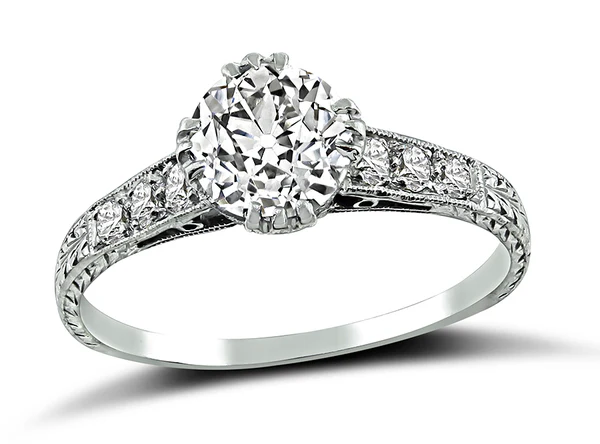
Edwardian Engagement Rings vs Victorian Styles represent two of the most iconic and romantic eras in jewelry history, each offering a distinct interpretation of elegance, craftsmanship, and design philosophy. While both styles are admired for their antique charm and timeless appeal, they differ significantly in materials, aesthetics, and the emotions they evoke. Understanding these differences helps buyers choose a ring that truly reflects their personality and sense of style.
Understanding the Victorian Era Style
Victorian engagement rings, originating from the period of Queen Victoria’s reign (1837–1901), are known for their romantic, symbolic, and often bold designs. These rings frequently feature yellow or rose gold settings, as platinum was not widely used during this time. Gemstones such as garnets, rubies, emeralds, and pearls were commonly incorporated, often arranged in cluster styles or floral patterns.
A defining feature of Victorian rings is their symbolism. Hearts, bows, serpents, and flowers were used to represent love, eternity, and devotion. The designs tend to feel warm, sentimental, and expressive, making them ideal for those who appreciate emotional storytelling through jewelry. The craftsmanship, though intricate, often leans toward heavier and more solid structures compared to later eras.
The Refined Beauty of Edwardian Engagement Rings
Edwardian engagement rings, crafted during the early 1900s, reflect a shift toward lighter, more delicate, and sophisticated designs. This era embraced platinum as the primary metal, allowing jewelers to create intricate, lace-like settings that were both strong and visually airy. The use of platinum enabled finer detailing, including filigree work, milgrain edges, and openwork designs that give Edwardian rings their signature elegance.
Diamonds became the central focus in Edwardian rings, often accompanied by smaller accent stones such as sapphires. The overall aesthetic is graceful and refined, with a strong emphasis on symmetry and balance. These rings are perfect for individuals who prefer subtle luxury and understated sophistication over bold statements.
Key Differences in Design and Aesthetics
When comparing Edwardian engagement rings with Victorian styles, the most noticeable difference lies in their overall appearance. Victorian rings are typically more ornate and expressive, with rich colors and symbolic motifs. In contrast, Edwardian rings emphasize delicacy, lightness, and intricate detail.
Victorian designs often feature closed-back settings, which can slightly limit the brilliance of gemstones. Edwardian rings, on the other hand, utilize open settings that allow more light to pass through the stones, enhancing their sparkle. This technical advancement contributes to the more radiant appearance of Edwardian jewelry.
Materials and Craftsmanship
The choice of materials further distinguishes these two styles. Victorian rings predominantly use gold, with occasional silver elements, while Edwardian rings are almost exclusively crafted in platinum. Platinum not only provides durability but also allows for more intricate and precise designs.
In terms of craftsmanship, both eras demonstrate exceptional skill, but the techniques differ. Victorian jewelers focused on engraving and symbolic design elements, while Edwardian artisans excelled in creating fine, lace-like patterns and detailed metalwork. The transition from heavier to more delicate structures marks a significant evolution in jewelry design.
Emotional Appeal and Symbolism
Victorian engagement rings are deeply rooted in symbolism and personal expression. Each design element often carries a specific meaning, making these rings highly sentimental. They are ideal for those who value tradition, romance, and storytelling.
Edwardian engagement rings, while still romantic, convey elegance in a more refined and understated manner. Their beauty lies in their craftsmanship and design rather than symbolic motifs. This makes them appealing to individuals who prefer sophistication and timeless grace.
Durability and Wearability
While both styles are durable, Edwardian rings generally offer better long-term wearability due to the strength of platinum. The lighter design also makes them more comfortable for daily use. Victorian rings, especially those with intricate gemstone arrangements, may require more care to maintain their condition over time.
Modern Appeal and Popularity
Today, both Edwardian and Victorian engagement rings are highly sought after, but they cater to different tastes. Victorian rings attract those who love bold, vintage aesthetics and meaningful symbolism, while Edwardian rings appeal to buyers looking for elegance, fine detailing, and a classic look that pairs well with modern fashion.
The growing interest in antique jewelry has further increased the popularity of both styles, as more people seek unique alternatives to mass-produced modern rings.
Investment and Value
Both Edwardian and Victorian engagement rings hold significant value due to their age, rarity, and craftsmanship. However, Edwardian rings often command higher prices because of their use of platinum and their intricate, labor-intensive designs. Victorian rings, with their historical significance and unique gemstone combinations, are also valuable, particularly when they feature rare or high-quality stones.
Choosing the Right Style
Selecting between Edwardian and Victorian styles ultimately comes down to personal preference. If you are drawn to bold designs, rich colors, and symbolic meaning, Victorian rings are an excellent choice. If you prefer delicate, intricate, and elegant designs with a focus on diamonds and fine craftsmanship, Edwardian engagement rings may be the perfect fit.
Conclusion
Edwardian engagement rings and Victorian styles each offer a unique interpretation of elegance, reflecting the artistic and cultural values of their respective eras. While Victorian rings celebrate romance and symbolism through bold designs, Edwardian rings redefine elegance with their delicate craftsmanship and refined beauty. Both styles continue to captivate modern buyers, proving that true artistry and timeless design never go out of style.

 English
 Arabic
 French
 Spanish
 Portuguese
 Deutsch
 Turkish
 Dutch
Dutch
 Russian
 Romaian
 Portuguese (Brazil)
 Greek
Greek