
Introduction
The Palestine scarf is often seen as a bold visual piece, but reducing it to fashion alone misses its deeper meaning. More accurately known as the keffiyeh, this traditional cloth carries history, memory, and a visible connection to Palestinian identity. For many people, it represents belonging, resilience, and a relationship to land that cannot be separated from culture.
Online, people search for it in different ways. Some call it a Keffiyeh Scarf, some search for a palestine head scarf, and others type terms like shemagh kufiya while trying to understand regional names and variations. Even though the wording changes, the real question behind those searches is often the same: what does this cloth actually mean, and why has it remained so important across generations?
What It Really Is
At its most basic level, the keffiyeh is a square cotton scarf traditionally worn across parts of the Arab world for protection from sun, wind, and dust. In Palestinian culture, however, it became much more than a practical garment. The palestinian keffiyeh evolved into a recognizable symbol tied to daily life, memory, and collective identity.
Because keffiyeh and shemagh are often used interchangeably in online searches, many readers assume they all mean exactly the same thing. In practice, the words can overlap, but context matters. The black-and-white version is especially associated with Palestine, and that association gives it a distinct cultural and emotional weight.
Rooted in Daily Life
Long before it appeared in fashion shoots or trend reports, this scarf belonged to ordinary life. Farmers, workers, and families wore it for function, comfort, and familiarity. It was part of the rhythm of everyday living rather than an item chosen for visual effect alone.
That older connection still matters. A cloth that once helped people work the land later came to represent attachment to that land. This is one reason the scarf cannot be understood only through aesthetics. It carries the feeling of continuity: grandparents to parents, parents to children, homeland to diaspora.
This deeper layer is what gives the palestinian keffiyeh its lasting power. It is not important merely because people recognize it. It is important because people live through it, remember through it, and sometimes pass it down as a symbol of family and place.
A Pattern With Meaning
What many people identify as the palestine scarf pattern is more than a striking black-and-white design. Over time, the pattern has been read as a visual language linked with struggle, endurance, and rootedness. Some interpret parts of the design through ideas of land, labor, resistance, or connection. Whether every interpretation is official or not, what matters is that the pattern has come to carry shared meaning.
That is why this scarf feels different from a random accessory. It is seen at protests, in homes, in public gatherings, in photos of solidarity, and in spaces where identity matters. The same object can be worn quietly or publicly, but it rarely becomes neutral once its history is understood.
More Than a Trend
Fashion changes quickly. Meaning does not.
That is the clearest reason this item stands apart from ordinary styling pieces. Trends usually depend on novelty, but the keffiyeh survives because it holds memory. A seasonal accessory can disappear when tastes shift. A cultural symbol remains because people continue to find themselves in it.
This is also where many readers become more thoughtful. Someone may first notice the scarf because of its look, but once they understand its story, the conversation changes. It is no longer just about texture, outfit balance, or color contrast. It becomes about whether style can exist without respect, and whether wearing a symbol also carries responsibility.
How It Is Worn Today
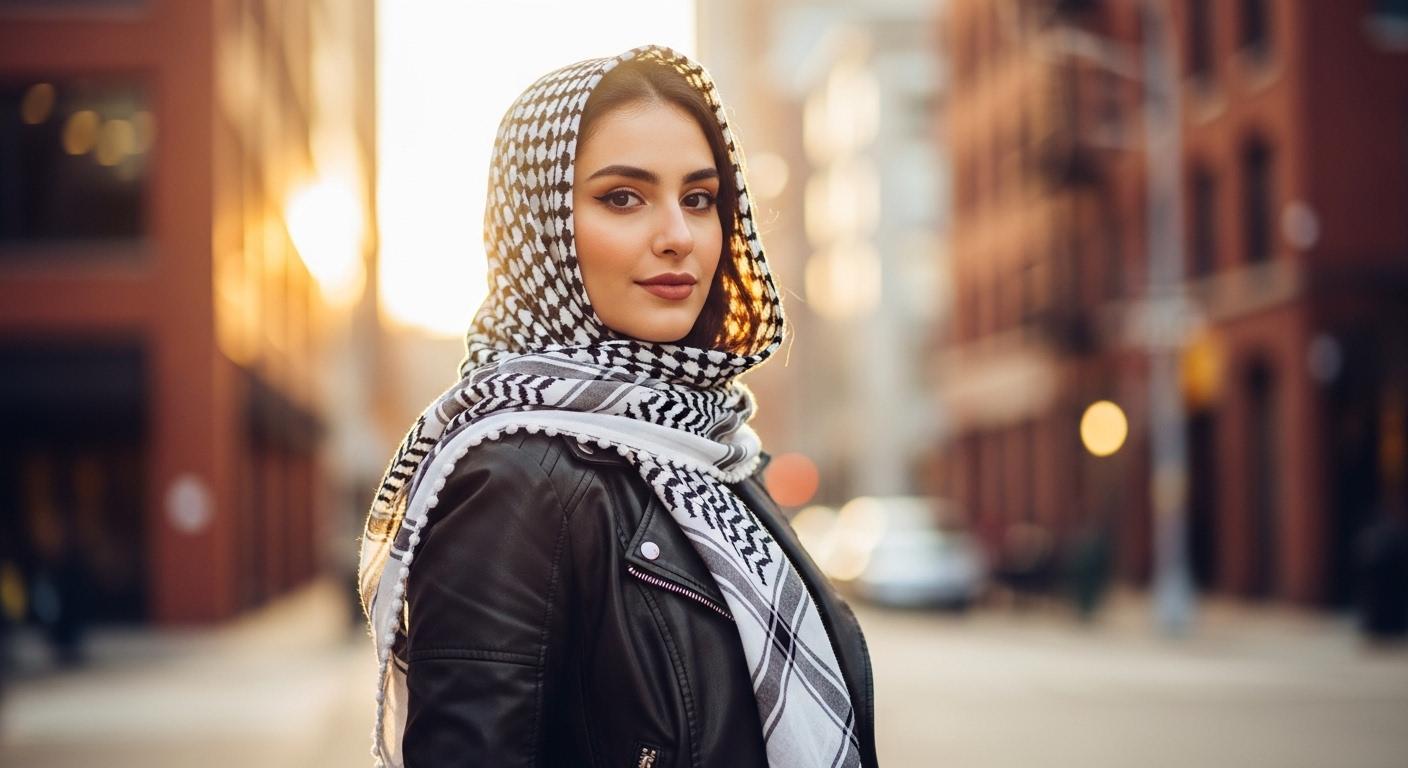
Today, the keffiyeh is worn in both traditional and modern ways. Some wear it over the shoulders, some wrap it around the neck, and some fold it more classically as a head covering. In streetwear, it may be paired with simple layers like coats, knitwear, denim, or neutral tailoring. In cultural settings, it can hold a more ceremonial or identity-centered presence.
The key difference is not only how it is worn, but why it is worn.
When people choose it only because it looks dramatic, they often strip away its background. When they wear it with understanding, the styling becomes more grounded. Respectful styling tends to keep the symbol visible without turning it into costume. Clean outfits, modest coordination, and cultural awareness usually work better than loud combinations that treat it like a novelty prop.
Respect Matters
One of the most common concerns today is whether non-Palestinians can wear it. The honest answer depends on intention, awareness, and context. Wearing it as a joke, trend costume, or empty aesthetic choice can feel dismissive. Wearing it with knowledge, restraint, and genuine respect is very different.
A good rule is simple: learn before you wear. Understand what it represents to many people. Avoid reducing it to “edgy fashion.” Do not detach it from the reality that gives it meaning.
Authenticity matters here too. Shoppers searching for Original Palestinian Keffiyehs are often looking for more than product quality. They are looking for honesty, craftsmanship, and a closer connection to the people and traditions behind the scarf. That makes buying decisions part of the wider conversation.
Identity, Solidarity, and Visibility
For some wearers, the scarf expresses heritage. For others, it signals solidarity. For many, it can do both at once. That is part of why it remains powerful across time. It sits at the meeting point of culture, visibility, and political awareness without being reducible to only one of those things.
This layered meaning is exactly why the scarf still matters in modern life. It can appear in everyday clothing, in public expression, and in personal memory. It can feel intimate in one moment and deeply public in another. Few garments hold that kind of range.
Readers who want the historical angle in more depth can explore our related guide on How the Palestinian Keffiyeh Survived Wars, Trends, and Time.
Final Thoughts
To see this scarf only as fashion is to stop at the surface. Its real importance comes from everything carried beneath that surface: history, identity, memory, and meaning. It has remained visible not because it is trendy, but because it speaks for something larger than trend.
That is why people continue to return to it across generations. Not simply to wear it, but to recognize what it stands for.
Conclusion
The Palestine scarf is not just a piece of fabric or a passing fashion trend. It carries history, identity, and a deeper cultural meaning that gives it lasting importance. For many people, it represents heritage, resilience, and a visible connection to فلسطين and its people.
While its pattern and styling may attract attention at first, its true value lies in what it stands for. That is why understanding the story behind it matters just as much as wearing it. When seen with respect, the Palestine scarf becomes more than an accessory—it becomes a symbol of memory, culture, and meaning that continues to stay relevant across generations.
FAQs
What is a keffiyeh?
A keffiyeh is a traditional square scarf worn in different parts of the Arab world. In the Palestinian context, it is especially associated with cultural identity, heritage, and solidarity.
Is the Palestine scarf cultural or political?
It is primarily cultural, but in many contexts it also carries political meaning. Its significance often depends on history, place, and the reason it is being worn.
How can you wear it respectfully?
Wear it with awareness of its background, keep styling simple, and avoid treating it as a costume or temporary trend. Respect starts with understanding.

 English
 Arabic
 French
 Spanish
 Portuguese
 Deutsch
 Dutch
Dutch
 Italiano
 Russian
 Romaian
 Portuguese (Brazil)
 Greek
Greek