
From Manual Tasks to Smart Work: The Impact of Automation Software
In many businesses, people still spend a large part of the day doing repeated tasks by hand. These tasks can include entering data, sending follow-up emails, moving files, creating reports, updating records, and checking approvals. While each task may look small, they add up and take a lot of time. Automation software helps solve this problem by doing these routine jobs automatically, so employees can spend more time on useful and meaningful work.
Automation is not only about saving time. It also helps teams work more accurately, stay organized, and complete work faster. When software handles repetitive steps, the process becomes smoother and more reliable. This is why many modern companies now use automation tools in areas like sales, customer service, finance, HR, operations, and marketing.
What automation software means
Automation software is a type of digital tool that performs tasks with little or no human effort. It follows set rules, triggers, or workflows to complete actions automatically. For example, if a customer fills out a form, the software can send a reply email, save the details into a database, and create a task for the sales team without anyone doing it manually.
This kind of software is used to handle work that is repetitive, predictable, and time-consuming. It does not replace all human work. Instead, it supports people by removing simple tasks from their daily load. This allows employees to focus on planning, decision-making, problem-solving, and customer relationships.
Why manual work slows teams down
Manual work takes more time because every step depends on a person. Someone must read the request, enter the information, check for mistakes, send it to the next person, and repeat the process again and again. In busy teams, this can create delays, confusion, and extra pressure.
Manual work also increases the chance of errors. People get tired, distracted, or rushed, and small mistakes can cause bigger problems later. A wrong invoice number, missed follow-up, or duplicate record can slow down the whole process. Over time, these errors can affect customer experience, team productivity, and business performance.
How automation reduces manual work
Automation software reduces manual work in many practical ways. It can remove repetitive data entry, speed up approvals, send automatic reminders, and move information between systems. Instead of asking people to do the same action again and again, the software does it for them in a consistent way.
It also reduces duplicate work. In manual systems, different teams may enter the same information into different tools. Automation connects those systems so data flows smoothly from one place to another. This means less copying, fewer mistakes, and less time wasted on repeated steps.
Repetitive tasks become automatic
Many office tasks are routine. These include invoice processing, report generation, status updates, lead assignment, and ticket routing. Automation software can handle these tasks on its own once the rules are set. This saves employees from spending hours on work that does not require creativity or deep thinking.
For example, when an invoice arrives, automation software can read the details, check them against records, and send it for approval. A process that once took several people and many minutes can now move much faster. The same idea works in HR, support, finance, and operations.
Workflows move faster
Manual workflows often slow down because they depend on people to remember the next step. Emails sit unanswered, forms get misplaced, and approvals take longer than expected. Automation keeps work moving by sending tasks forward when conditions are met.
This means a process does not stop just because one person is busy. The software can send reminders, update records, and alert the right person at the right time. As a result, work reaches completion faster and with less delay.
Data entry becomes easier
Data entry is one of the most common manual tasks in many companies. It is also one of the most tiring. Employees often have to type the same information into more than one system, which takes time and creates room for errors.
Automation software can extract data from forms, emails, and documents, then place it in the correct fields automatically. This reduces typing, improves consistency, and helps teams avoid duplicate or incorrect records.
How automation improves productivity
Productivity improves when people can do more valuable work in less time. Automation software helps make that possible by removing low-value tasks from the schedule. This gives employees more time for strategic work, customer service, creative thinking, and planning.
A productive team is not just a fast team. It is a team that uses time well. When automation handles routine work, employees can focus on tasks that need judgment and skill. This often leads to better output, better service, and better results overall.
Employees focus on higher-value work
One major benefit of automation is that it frees staff from repetitive admin work. Instead of spending hours updating spreadsheets or sending manual reminders, employees can work on analysis, communication, and problem-solving.
This makes people more engaged in their jobs. Many workers feel frustrated when their day is filled with repetitive tasks. Automation helps reduce that frustration and gives them work that feels more useful and rewarding.
Fewer errors improve output
Productivity is not only about speed. It is also about quality. If a team works fast but makes many mistakes, the final result is still poor. Automation helps improve quality by using the same rules every time.
Since software runs on defined logic, it avoids common mistakes and missed steps, and with SaaS SEO enhancing workflow clarity, this improves accuracy, saves time, and boosts productivity across daily operations.
Better time management
Automation improves time management because it reduces the number of small tasks employees must remember. Automatic reminders, status updates, recurring reports, and scheduled actions all help keep work on track.
This creates a more predictable workday. People can plan their time better because they are not constantly interrupted by simple, repetitive jobs. Over a week or month, this creates a noticeable productivity gain.
Real business examples
Automation is useful across many departments. In finance, it can process invoices, send payment reminders, and track approvals. In HR, it can manage onboarding, interview scheduling, and employee record updates. In customer support, it can create tickets, send acknowledgments, and route requests to the right team.
In sales and marketing, automation can capture leads, send follow-up emails, and update customer records automatically. In operations, it can move files, generate reports, and monitor process steps. These examples show that automation is not limited to one type of business. It can improve many different workflows.
Key benefits for teams
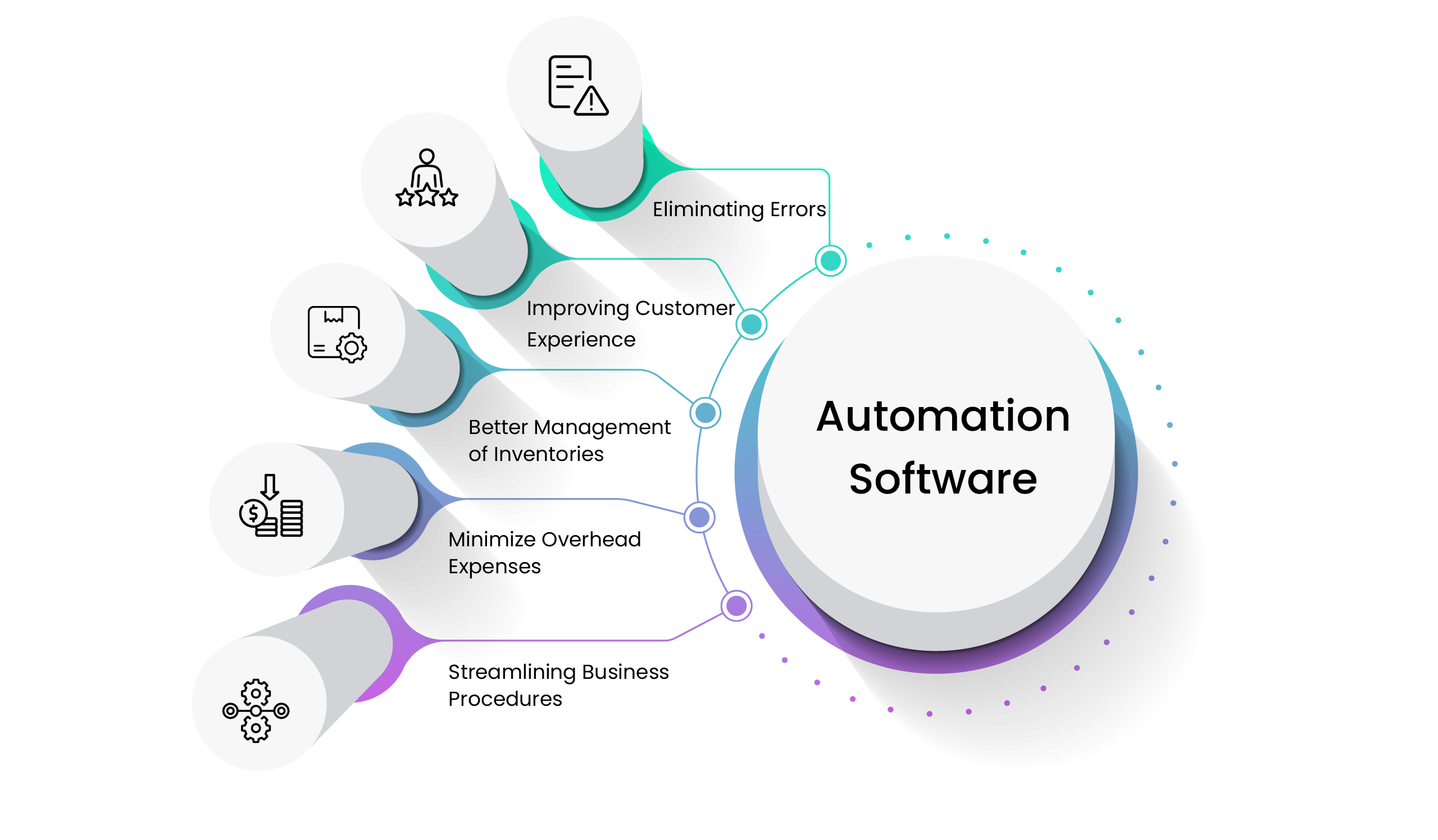
Automation software gives teams several clear benefits. It saves time, reduces manual effort, improves accuracy, and helps employees stay focused on important work. It can also lower operating costs over time because fewer hours are spent on repetitive work.
Another important benefit is consistency. Manual work may differ from person to person, but automation follows the same process every time. This creates better control and more reliable results. For businesses that handle many tasks each day, consistency is a major advantage.
| Benefit | How it helps |
| Saves time | Repetitive tasks happen automatically, so work finishes faster |
| Reduces errors | The software follows fixed rules, which lowers mistakes |
| Improves focus | Employees can spend time on important work instead of routine tasks |
| Increases consistency | The same process is followed every time |
| Supports growth | Teams can handle more work without adding as many extra hours |
Common areas where automation helps
Automation works best in tasks that are repeated often and follow a clear pattern. These include approvals, notifications, scheduling, reporting, document processing, and data transfer between systems. Because these tasks are predictable, software can handle them well.
It is especially useful when work must be done quickly and accurately. For example, if a company receives hundreds of customer requests each day, automation can route each one to the correct department without delay. This improves both internal efficiency and customer experience.
Challenges to keep in mind
Automation is powerful, but it should be used wisely. Not every task should be automated. Work that needs human judgment, creativity, or personal connection should still be handled by people. The best results come when automation supports the team instead of replacing every part of the process.
It is also important to choose the right software and set it up properly. Poorly designed automation can create confusion if the process itself is not clear. Before automating, businesses should review their workflow and remove unnecessary steps. Then the software can help make a good process even better.
Simple example
Imagine a company that receives 300 new customer form submissions each week. If staff handle each one by hand, they must check the form, enter details into the CRM, send a welcome email, and assign the lead to sales. This takes time and can lead to mistakes.
With automation software, all of these steps can happen automatically. The customer gets a quick response, the sales team receives the lead right away, and the record is saved without manual typing. This saves hours every week and helps the business respond faster.
Why it matters today
Businesses today move fast, and customers expect quick responses. Teams that rely too much on manual work often struggle to keep up. Automation gives companies a way to work faster without sacrificing quality.
It also helps businesses grow without making every process more complicated. As work volume increases, automation can take on more tasks without needing the same increase in manual effort. That makes it an important part of modern productivity.
Conclusion
Automation software reduces manual work by handling repetitive tasks, connecting systems, and speeding up workflows. It improves productivity by helping employees focus on higher-value work, reducing errors, and making daily operations smoother. For businesses that want to save time and improve performance, automation is one of the most practical tools available today.

 English
 Arabic
 French
 Spanish
 Portuguese
 Turkish
 Dutch
Dutch
 Italiano
 Russian
 Romaian
 Portuguese (Brazil)
 Greek
Greek