
Introduction
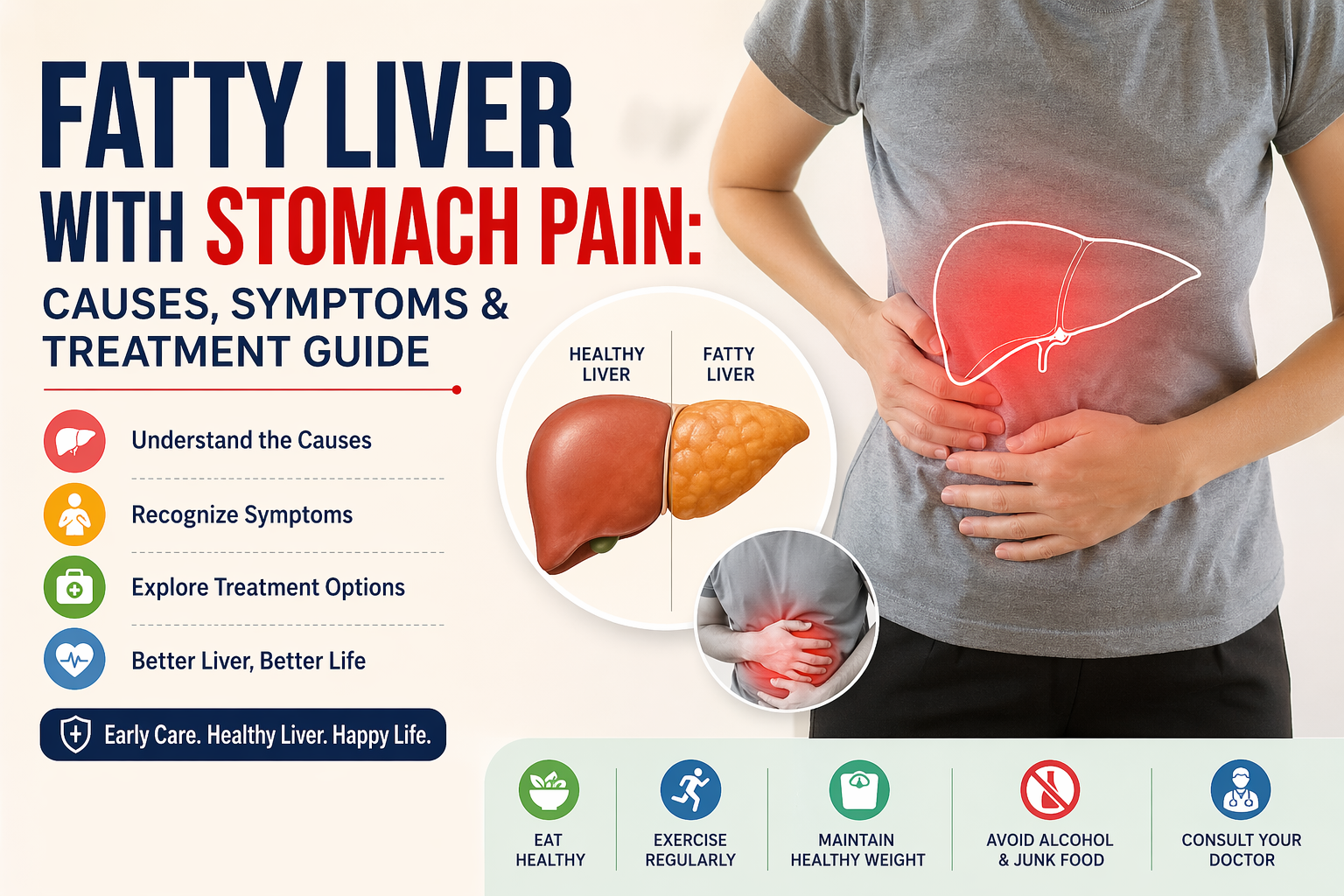
Have you been feeling stomach pain and wondering if your liver could be the reason? You’re not alone. Many people think fatty liver disease is silent, but in some cases, it can come with discomfort, bloating, and pain in the upper abdomen. Your liver is like the body’s chemical factory—it works day and night to process food, remove toxins, and store energy. But when fat builds up inside it, problems can begin.
Learn causes, symptoms, and treatment of fatty liver with stomach pain. Expert care tips and advice from a liver transplant surgeon in india
The good news? Fatty liver can often be managed and even reversed with the right lifestyle changes and medical care. In this complete guide, we’ll explain why fatty liver may cause stomach pain, the warning signs to watch for, and the best treatment options .
1. What Is Fatty Liver Disease?
Fatty liver disease happens when extra fat builds up in the liver cells. A small amount of fat is normal, but too much can damage the liver over time.
There are two main forms:
- Non-Alcoholic Fatty Liver Disease (NAFLD): Happens in people who drink little or no alcohol.
- Alcoholic Fatty Liver Disease: Caused by heavy alcohol use.
At first, fatty liver may not cause symptoms. But if inflammation develops, it can lead to pain, tiredness, and serious liver damage.
2. Can Fatty Liver Cause Stomach Pain?
Yes, it can. Many people with fatty liver report pain or discomfort in the upper right side of the abdomen, where the liver is located.
This pain is usually:
- Mild to moderate
- Dull or heavy feeling
- Worse after heavy meals
- Associated with bloating or fullness
It may not feel sharp like appendicitis or gallbladder pain, but it can still affect daily life.
3. Why Does Stomach Pain Happen in Fatty Liver?
There are several reasons why fatty liver may cause stomach pain:
Liver Enlargement
When fat collects in the liver, it may become enlarged. This stretches the outer covering of the liver, causing discomfort.
Inflammation
If fatty liver progresses to inflammation (steatohepatitis), the area can become tender.
Digestive Problems
Fatty liver is often linked with indigestion, gas, bloating, and acidity.
Associated Conditions
Sometimes the pain is due to related issues such as gallstones, obesity, or diabetes.
Think of it like overloading a backpack. The more weight you add, the more strain it causes.
4. Common Symptoms of Fatty Liver
Many people have no symptoms at first. But when signs appear, they may include:
- Stomach pain or fullness
- Bloating
- Fatigue
- Loss of appetite
- Nausea
- Unexplained weight gain
- Weakness
- Mild swelling in the abdomen
- Difficulty concentrating
In advanced cases, symptoms can include jaundice, swelling in legs, or severe tiredness.
5. Types of Fatty Liver Disease
Simple Fatty Liver
Fat is present, but there is little or no inflammation.
NASH (Non-Alcoholic Steatohepatitis)
This is a more serious stage with fat, inflammation, and liver cell damage.
Fibrosis
Long-term inflammation can create scar tissue.
Cirrhosis
Severe scarring affects liver function and can become life-threatening.
Early treatment can prevent these later stages.
6. Who Is at Risk?
You may have a higher risk of fatty liver if you have:
- Obesity
- Diabetes
- High cholesterol
- High triglycerides
- High blood pressure
- Sedentary lifestyle
- Poor diet
- Excess alcohol use
- PCOS
- Sleep apnea
Even slim people can develop fatty liver, especially if they have unhealthy eating habits or insulin resistance.
7. How Is Fatty Liver Diagnosed?
If you have stomach pain and suspect fatty liver, a doctor may recommend:
Blood Tests
Checks liver enzymes such as ALT and AST.
Ultrasound
A common scan used to detect fatty liver.
FibroScan
Measures liver stiffness and fat content.
CT Scan or MRI
Used in some cases for a clearer picture.
Liver Biopsy
Rarely needed, but may confirm inflammation or fibrosis.
Never ignore persistent stomach pain. It’s better to check early.
8. Best Treatment Options
There is no single magic pill, but fatty liver often improves with healthy habits.
Weight Loss
Losing even 5% to 10% of body weight can reduce liver fat.
Exercise
Aim for 30 minutes of walking, cycling, or yoga most days.
Healthy Diet
Choose whole foods, fruits, vegetables, and lean protein.
Control Diabetes and Cholesterol
Managing these conditions protects the liver.
Avoid Alcohol
Even small amounts may worsen liver stress.
Medicines
Doctors may prescribe treatment based on your health conditions.
For severe liver damage, expert guidance from a liver transplant surgeon in india or hepatology team may be needed.
9. Foods to Eat and Avoid
Best Foods for Fatty Liver
- Leafy greens
- Oats
- Brown rice
- Fruits
- Nuts
- Olive oil
- Fish
- Lentils
- Green tea
Foods to Avoid
- Sugary drinks
- Fried food
- Processed snacks
- White bread
- Pastries
- Excess salt
- Red meat (in excess)
- Alcohol
Food choices matter more than many people realize.
10. When to See a Doctor
Seek medical help if you have:
- Pain lasting more than a few days
- Frequent bloating
- Loss of appetite
- Yellow eyes or skin
- Swollen belly
- Vomiting
- Severe weakness
- Unexplained weight loss
These signs may point to worsening liver disease or another condition.
11. Can Fatty Liver Be Reversed?
In many cases, yes. Early fatty liver can improve significantly with lifestyle changes.
People who:
- Lose weight gradually
- Exercise regularly
- Eat healthy meals
- Reduce sugar intake
- Avoid alcohol
- Follow medical advice
…often see better scans and blood test results within months.
The key is consistency, not perfection.
12. Complications If Ignored
Untreated fatty liver may lead to:
- NASH
- Fibrosis
- Cirrhosis
- Liver failure
- Liver cancer
- Heart disease
- Kidney problems
That’s why early diagnosis matters. What starts as “just fat” can become much more serious if ignored.
13. Role of Specialist Care
Sometimes fatty liver becomes advanced and needs specialist treatment. A gastroenterologist, hepatologist, or liver transplant surgeon in india can guide care in complex cases.
They may help with:
- Advanced liver disease management
- Cirrhosis treatment
- Portal hypertension care
- Liver cancer screening
- Transplant evaluation when needed
Specialist care can improve outcomes and quality of life.
14. Prevention Tips
Want to protect your liver? Start here:
- Maintain a healthy weight
- Exercise daily
- Limit sugar
- Avoid alcohol
- Sleep well
- Manage stress
- Check blood sugar levels
- Eat home-cooked meals more often
- Get regular health checkups
Small daily habits can create big long-term results.
15. Final Thoughts
Fatty liver with stomach pain is more common than many people think. While the pain is often mild, it can be your body’s early warning signal. The liver is incredibly hardworking, but it also needs care and attention. By making healthier choices, getting tested on time, and seeking expert help when needed, you can protect your liver and overall health.
Don’t wait for severe symptoms. A few smart steps today can make a huge difference tomorrow.
FAQs
1. Where is fatty liver pain usually felt?
It is commonly felt in the upper right side of the abdomen, where the liver is located.
2. Can fatty liver cause gas and bloating?
Yes, many people with fatty liver also experience bloating, indigestion, and a feeling of fullness.
3. How long does it take to reverse fatty liver?
It depends on the person, but many see improvement within a few months of lifestyle changes.
4. Is fatty liver dangerous?
Early stages are manageable, but untreated fatty liver can progress to cirrhosis or liver failure.
5. When should I consult a liver transplant surgeon in india?
You should consult one if there is advanced liver disease, cirrhosis, liver failure, or if a transplant is being considered.

 English
 French
 Spanish
 Portuguese
 Deutsch
 Turkish
 Dutch
Dutch
 Italiano
 Russian
 Romaian
 Portuguese (Brazil)
 Greek
Greek