
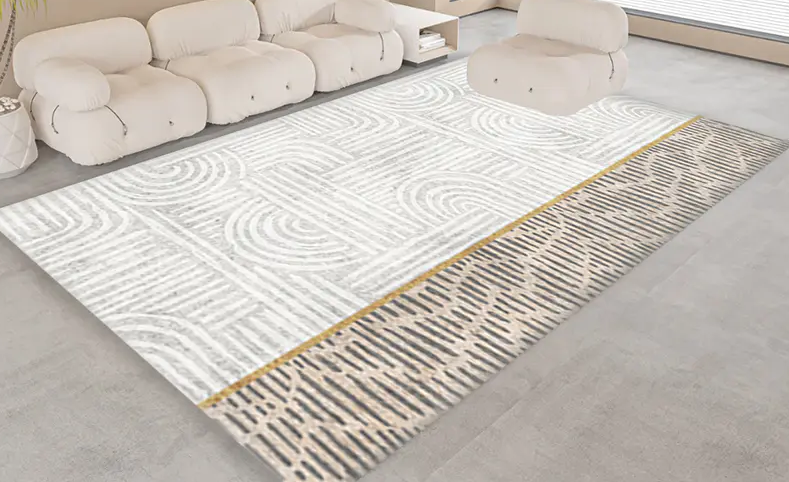
Every interior style has its own language, and living room rugs are one of the most expressive words in that vocabulary. Whether your space leans modern, rustic, traditional, or somewhere in between, the right rug speaks fluently to the design choices already in the room — and can even forgive a few mismatched ones.
In contemporary living rooms, rugs tend to favor clean lines and restrained color palettes. Low-pile rugs in solid tones or subtle geometric patterns complement the kind of furniture that keeps things spare and intentional. A charcoal flatweave rug beneath a slate-gray sofa and a glass coffee table reads as effortlessly put together without trying too hard.
Bohemian and eclectic spaces operate by entirely different rules. Here, a hand-knotted Moroccan rug or a vibrant kilim brings exactly the kind of layered, well-traveled energy that this style thrives on. Colors can clash in an interesting way. Patterns can overlap. A vintage or distressed rug with visible wear carries character that a brand-new piece sometimes cannot replicate.
Scandinavian-inspired rooms appreciate simplicity and natural materials. A flat-woven cotton rug in black and white, or a plush wool rug in warm ivory, suits the light-filled, uncluttered quality of this aesthetic without disrupting it. Meanwhile, traditional living rooms with dark wood furniture and rich upholstery often call for Oriental-style rugs, Persian-influenced designs, or deep jewel-toned patterns that echo the formality and depth already present in the room.
The real trick is resisting the urge to be too literal. Your living room rug does not need to match your cushions or mirror your curtains. It simply needs to feel at home in the room — like it arrived there naturally, not like it was chosen from a checklist.

 English
 Arabic
 French
 Spanish
 Portuguese
 Deutsch
 Turkish
 Italiano
 Russian
 Romaian
 Portuguese (Brazil)
 Greek
Greek