
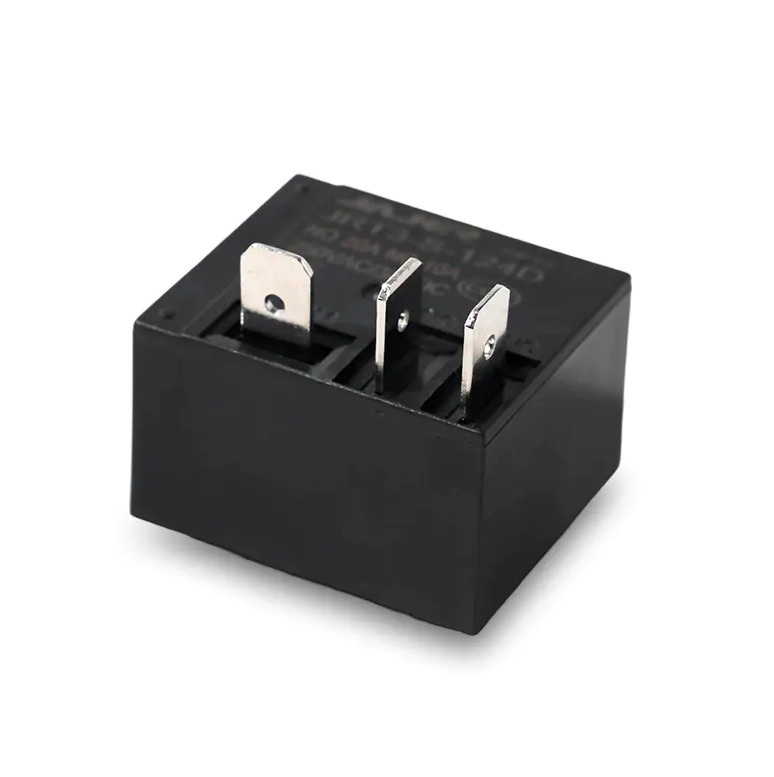
As industry moves toward increased automation, connectivity and data-driven decision-making, the familiar switching devices — including the General Purpose Relay and the Industrial Control Relay — are also evolving. This article explores how relay technology is adapting in the era of smart manufacturing, and what engineers should watch for.
The classical relay design remains: coil input controlling contacts that switch a load. But in modern systems the functions expected of relays are broadening. For example, more relays now include diagnostic feedback (indicators of coil status, contact status, load current), monitoring features, and remote interface capability. In industrial control relay applications, real-time monitoring and predictive maintenance are increasingly relevant.
One trend is the miniaturisation and increased integration of relay functions. Even a General Purpose Relay may now be designed for tighter spaces (slim form factor), easier mounting (DIN rail or socket), faster switching and simpler replacement. Meanwhile, for Industrial Control Relay roles, manufacturers are offering relays that integrate with smart control systems: they may log switching cycles, measure contact resistance, and integrate with industrial networks for status reporting.
Another dimension is compatibility with more complex loads — variable‐speed drives, energy-efficient lighting, capacitive loads, heavy inductive motor starting. The contact materials, coil designs and arc suppression techniques are being refined to match these challenges. For example, literature on industrial relays highlights how contact material selection (silver-nickel vs silver-tin-oxide) affects durability when handling inrush or capacitive loads. As system designers adopt more demanding loads and more switching cycles, these considerations become central.
In addition, the push toward Industry 4.0 means that relays may become nodes rather than simple passive components. Imagine an Industrial Control Relay that can report its health over a network, trigger a replacement order when cycles exceed a threshold, or adjust its switching profile based on ambient conditions. Though this level of “smart relay” may not yet be ubiquitous, it is emerging.
From a sustainability perspective, relays are also being designed to consume less coil power, reduce switching losses, and facilitate easier recycling or maintenance. As automation systems scale, choosing relay components that align with long-term serviceability, wiring simplicity, modularity and connectivity becomes a differential.

 English
 Arabic
 French
 Spanish
 Portuguese
 Deutsch
 Turkish
 Dutch
Dutch
 Italiano
 Romaian
 Portuguese (Brazil)
 Greek
Greek