
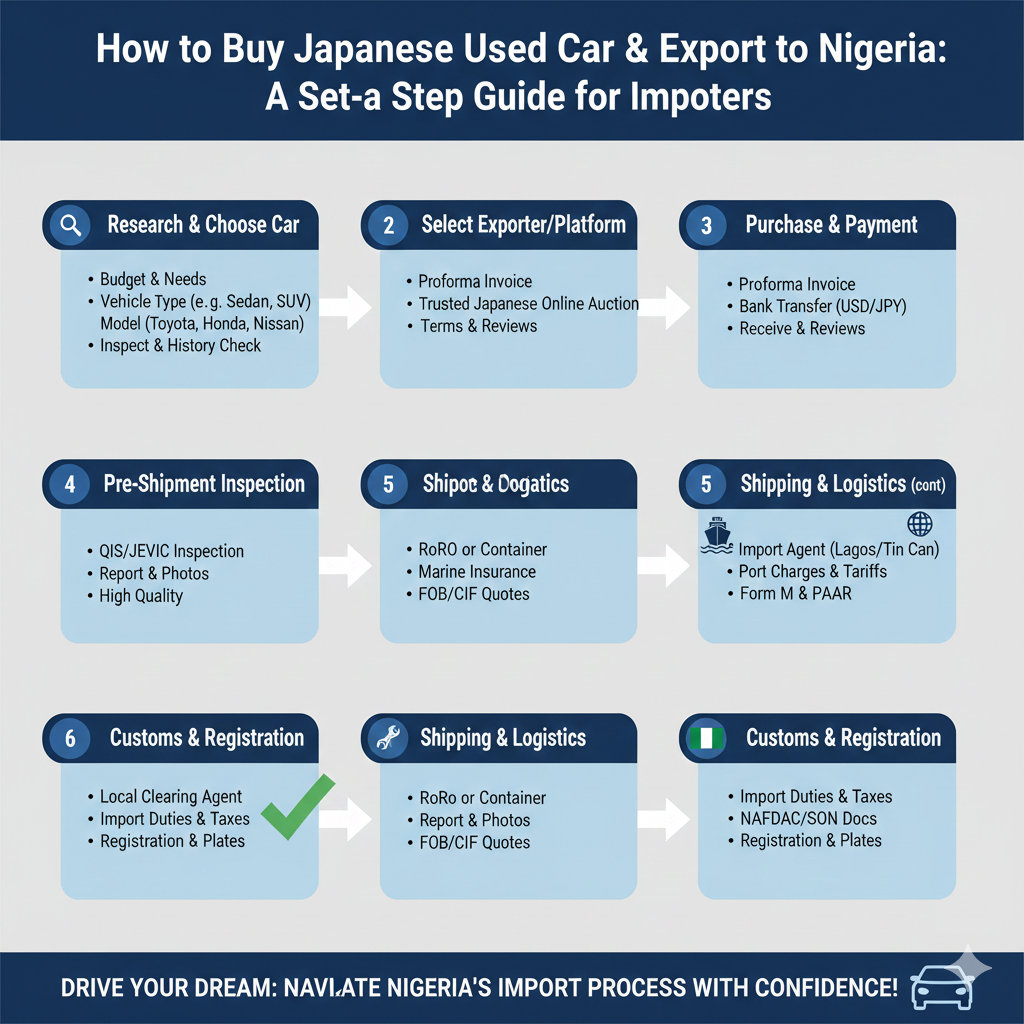
Importing used cars from Japan into Nigeria has remained one of the most cost-effective ways for individuals and dealers to access reliable vehicles. Japanese used cars are known for their durability, low mileage, and good maintenance history, making them ideal for Nigerian road conditions. However, the process involves several steps that must be followed carefully to avoid delays, losses, or regulatory issues. This guide explains how to buy used cars from Japan to Nigeria, step by step, in a clear and practical way.
Why Nigerian Importers Prefer Japanese Used Cars
Japan exports millions of used vehicles annually, and Nigeria is one of the major destination markets. The key reasons include:
-
Japanese vehicles are regularly serviced due to strict domestic regulations
-
Lower mileage compared to locally used cars
-
Wide availability of Toyota, Honda, Nissan, Lexus, and Mazda
-
Better value for money compared to buying locally
For Nigerian importers, these advantages translate into better resale value and customer trust.
Step 1: Understand Nigeria’s Vehicle Import Regulations
Before purchasing any vehicle, you must understand Nigeria’s import rules. Key considerations include:
-
Vehicles should generally be no more than 15 years old (age limits may vary based on port and enforcement)
-
Right-hand drive vehicles are acceptable
-
Import duty, levy, and VAT must be paid at Nigerian ports
-
Vehicle documents must be accurate and complete
Checking the current Nigeria Customs Service guidelines helps avoid compliance issues.
Step 2: Decide the Type of Car You Want to Import
Nigerian buyers often import vehicles for:
-
Personal use
-
Commercial transport (ride-hailing, taxis)
-
Resale and dealership stock
Popular models include Toyota Corolla, Camry, Hilux, Hiace, Lexus RX, and Honda Accord. Consider:
-
Fuel efficiency
-
Engine capacity
-
Spare parts availability
-
Market demand in Nigeria
Choosing the right model improves resale speed and profitability.
Step 3: Find a Reliable Japanese Car Exporter
Selecting a legitimate Japanese exporter is critical. A trustworthy exporter should:
-
Be properly registered in Japan
-
Offer verifiable vehicle details
-
Provide inspection reports or auction sheets
-
Clearly explain pricing and shipping terms
Avoid exporters who pressure you to make quick payments or refuse third-party inspections.
Step 4: Vehicle Selection and Inspection
Vehicles are sourced either from:
-
Dealer stock
-
Leasing and fleet returns
Inspection reports help you evaluate:
-
Mileage accuracy
-
Accident history
-
Mechanical condition
-
Interior and exterior quality
Although Japanese cars are generally reliable, inspections protect Nigerian buyers from hidden defects.
Step 5: Confirm Total Cost and Make Payment
The total cost typically includes:
-
Vehicle price
-
Shipping cost
-
Insurance (if applicable)
-
Export handling charges
Payments are usually made via international bank wire transfer. Always:
-
Confirm invoice details
-
Match vehicle chassis number with documents
-
Use traceable payment methods
Avoid cash or unverified payment channels.
Step 6: Shipping from Japan to Nigeria
Most vehicles are shipped to Nigerian ports such as Lagos (Apapa or Tin Can Island) using:
-
RO-RO shipping, which is cheaper and widely used
-
Container shipping, suitable for high-value or multiple vehicles
Shipping time typically ranges from 4 to 8 weeks depending on port schedules.
Step 7: Export Documentation from Japan
The exporter prepares essential documents, including:
-
Export Certificate
-
Bill of Lading
-
Commercial Invoice
-
Packing List
Accurate documentation ensures smooth customs clearance in Nigeria.
Step 8: Customs Clearance in Nigeria
Upon arrival, Nigerian importers must:
-
Pay customs duty, levy, and VAT
-
Complete valuation with Nigeria Customs Service
-
Clear the vehicle through port authorities
Using an experienced clearing agent can significantly reduce delays and unexpected charges.
Step 9: Vehicle Registration and Road Readiness
After clearance:
-
The vehicle is registered
-
Nigerian license plates are issued
-
Insurance and roadworthiness certification are completed
The car becomes legally fit for Nigerian roads.
Common Mistakes Nigerian Importers Should Avoid
-
Importing vehicles above age limits
-
Ignoring inspection reports
-
Underestimating total landed cost
-
Dealing with unverified exporters
Proper planning and documentation prevent financial losses.
Final Thoughts
Buying used cars from Japan for Nigeria importers is a proven business and personal ownership strategy. By understanding regulations, choosing reputable exporters, verifying inspections, and planning costs carefully, Nigerian buyers can import high-quality vehicles with confidence.
For first-time importers, patience and due diligence are essential. When done correctly, importing Japanese used cars into Nigeria offers excellent value, reliability, and long-term benefits.

 Arabic
 French
 Spanish
 Portuguese
 Deutsch
 Turkish
 Dutch
Dutch
 Italiano
 Russian
 Romaian
 Portuguese (Brazil)
 Greek
Greek