
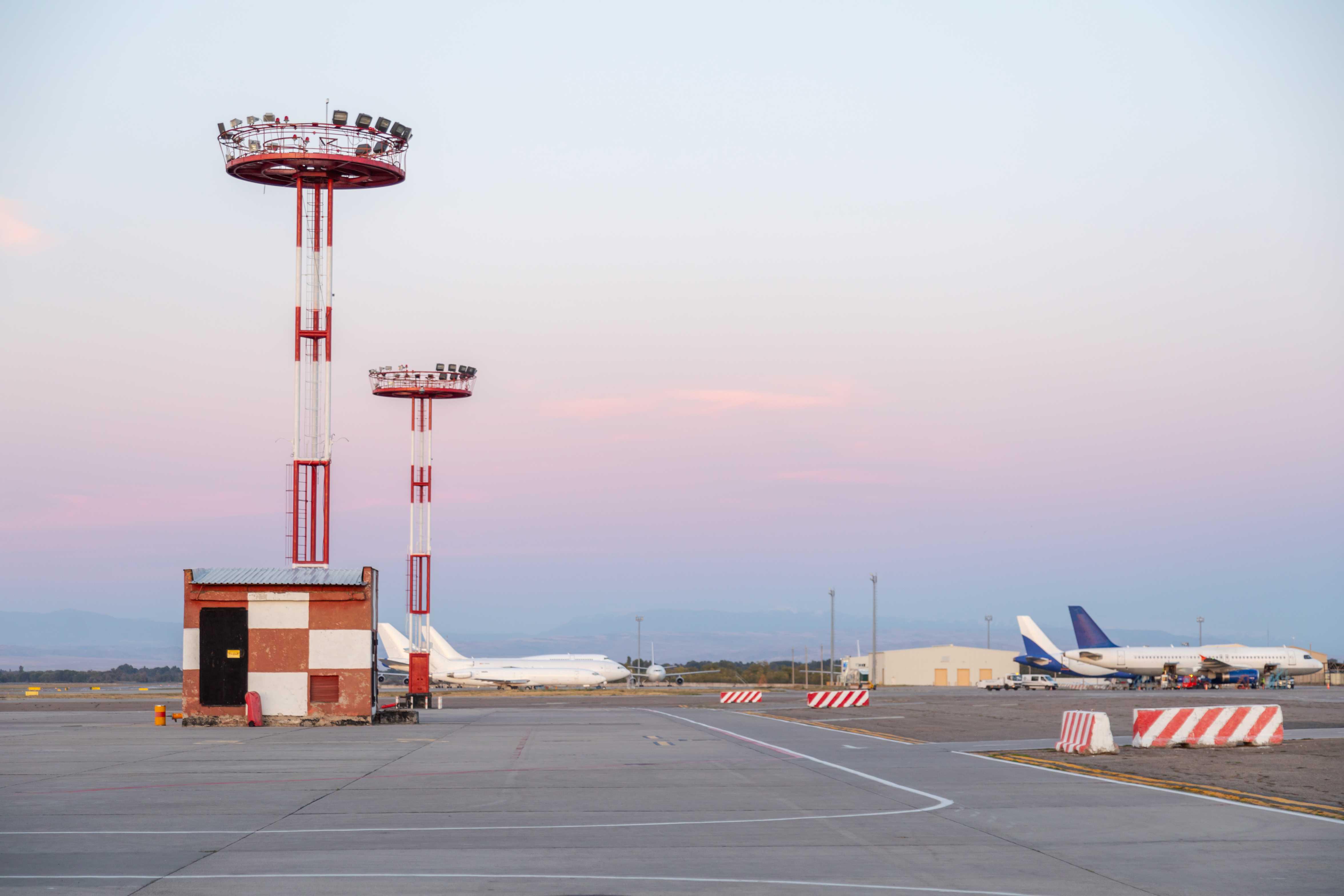
The silent revolution in aviation safety isn't happening in the sky, but on the ground. For decades, the technology guiding aircraft to the runway relied on analog signals and manual checks. Engineers would drive out to equipment shelters, hook up oscilloscopes, and physically tune the hardware. It was a reactive world; you fixed things when they broke or when a scheduled inspection caught a drift.
That world is rapidly disappearing. Today, the approach path is being digitized. The transition from analog maintenance to digital monitoring and automation is transforming how airports operate. It is shifting the paradigm from "fail and fix" to "predict and prevent."
The Instrument Landing Systems of the future will not just be radio transmitters; they will be smart IoT devices, fully integrated into the digital fabric of the smart airport. As air traffic continues to grow, this shift toward automation will be essential. It ensures that the safety net protecting every landing is not just strong, but smart enough to fix itself before it ever breaks.
This article explores how digital technologies are reshaping the reliability of precision approach aids. We will delve into real-time diagnostics, the power of predictive maintenance, and how forward-thinking infrastructure projects are integrating these digital layers to create smarter, safer airports.
The Shift from Analog to Digital Oversight
To understand the magnitude of this change, we must look at the baseline. A traditional precision approach system consists of radio transmitters that generate lateral and vertical guidance signals. These signals must remain incredibly stable. A drift of just a fraction of a degree can misalign an aircraft.
In the past, ensuring this stability required constant human intervention. Technicians performed daily or weekly site visits. Remote monitoring was limited to simple "go/no-go" status lights in the control tower. If a green light turned red, the system was down, and the runway capability was lost until a team could diagnose the fault.
Digital monitoring changes this entirely. Modern transmitters are now intelligent network nodes. They don't just broadcast a radio signal; they continuously analyze their own performance. They digitize the output waveform and compare it against ideal parameters thousands of times per second. This data is then streamed via high-speed networks to a central technical operations center, giving engineers a real-time, granular view of the system's health without ever leaving their desks.
Real-Time Diagnostics: The Nervous System of the Airport
The core of this modernization is the Remote Maintenance Monitoring (RMM) system. This acts as the central nervous system for airport navigation aids. Instead of a simple alarm, RMM provides a deep dive into the internal state of the equipment.
Granular Data Visibility
Engineers can now monitor specific parameters like Voltage Standing Wave Ratio (VSWR), modulation depth, and power amplifier temperature in real-time. If a cooling fan slows down by 10%, the system notes it. If the power output drops by 0.5 decibels, it is logged. This level of transparency eliminates the guesswork. When an alarm does occur, the technician already knows exactly which card has failed before they grab their toolkit.
Automated Self-Correction
Automation goes beyond just watching; it can also act. Modern digital systems often feature closed-loop control logic. If environmental factors—like a sudden temperature drop—cause the signal to drift slightly, the system’s internal processor can automatically adjust the drive levels to compensate, keeping the signal within strict tolerances. This automated self-correction maintains high availability during changing weather conditions that might have knocked an older analog system offline.
Predictive Maintenance: Fixing the Future
The true power of digital monitoring lies in what you can do with the data over time. By collecting historical performance data, airports are moving toward predictive maintenance. This is the ability to foresee a failure before it disrupts operations.
Trend Analysis
Algorithms can analyze weeks or months of data to identify subtle trends. For example, if the operating current of a specific component is creeping upward by 0.1% per week, it might not trigger an immediate alarm. However, the trend analysis software will flag this anomaly, predicting that the component will fail in approximately three months.
Strategic Intervention
This foresight allows maintenance teams to intervene strategically. Instead of rushing to fix a broken system during a busy Friday evening push, they can schedule a replacement for that degrading component during a quiet maintenance window on a Tuesday morning. The result is higher uptime, lower stress for the engineering team, and fewer delays for passengers.
The Role of Intelligent Infrastructure
Implementing these digital layers requires more than just new software; it requires a robust physical infrastructure capable of supporting it. The data streams from these systems need secure, high-bandwidth pathways to reach the control centers.
This is where advanced infrastructure planning plays a crucial role. The ambitious approach to airport engineering Qatar has adopted demonstrates how to build a foundation for this digital future. In designing Hamad International Airport, engineers didn't just install navigation aids; they built a comprehensive digital ecosystem.
The infrastructure supports this automation through:
- Fiber Optic Backbones: Replacing copper wiring with redundant fiber optic networks ensures that the high-volume diagnostic data is transmitted instantly and without corruption from electromagnetic interference.
- Centralized Control Centers: Data from all navigation aids is consolidated into a single, integrated operations center. This allows a small team of highly skilled engineers to oversee the entire airfield's status at a glance, rather than having disparate systems for different runways.
- Cybersecurity Layers: With landing systems becoming networked, they face new digital threats. The infrastructure includes robust firewalls and physically air-gapped networks to ensure that flight-critical safety systems are isolated from the public internet and administrative networks.
Enhancing Safety and Compliance
Digital automation also streamlines the complex burden of regulatory compliance. Aviation authorities require strict documentation of system performance. In the analog days, this meant stacks of paper logs and manual signatures.
Automated systems now generate digital logs automatically. Every test, every self-adjustment, and every alarm is time-stamped and stored in a secure database. This creates an unalterable audit trail. When regulators perform an inspection, the airport can instantly generate detailed reports proving the system has remained within tolerance every second of every day.
Furthermore, automated "health checks" can be scheduled to run during lulls in traffic. The system can perform a deep self-test—verifying backup batteries, switching mechanisms, and alarm relays—without human intervention, ensuring that safety backups are functional without requiring a manual shutdown.
Conclusion
The digitization of landing guidance is a quiet transformation with a loud impact. It is turning the invisible beams that guide aircraft into intelligent, self-monitoring data streams. By leveraging real-time diagnostics and predictive analytics, airports can achieve levels of reliability that were previously impossible.

 English
 Arabic
 French
 Spanish
 Portuguese
 Deutsch
 Turkish
 Italiano
 Russian
 Romaian
 Portuguese (Brazil)
 Greek
Greek