
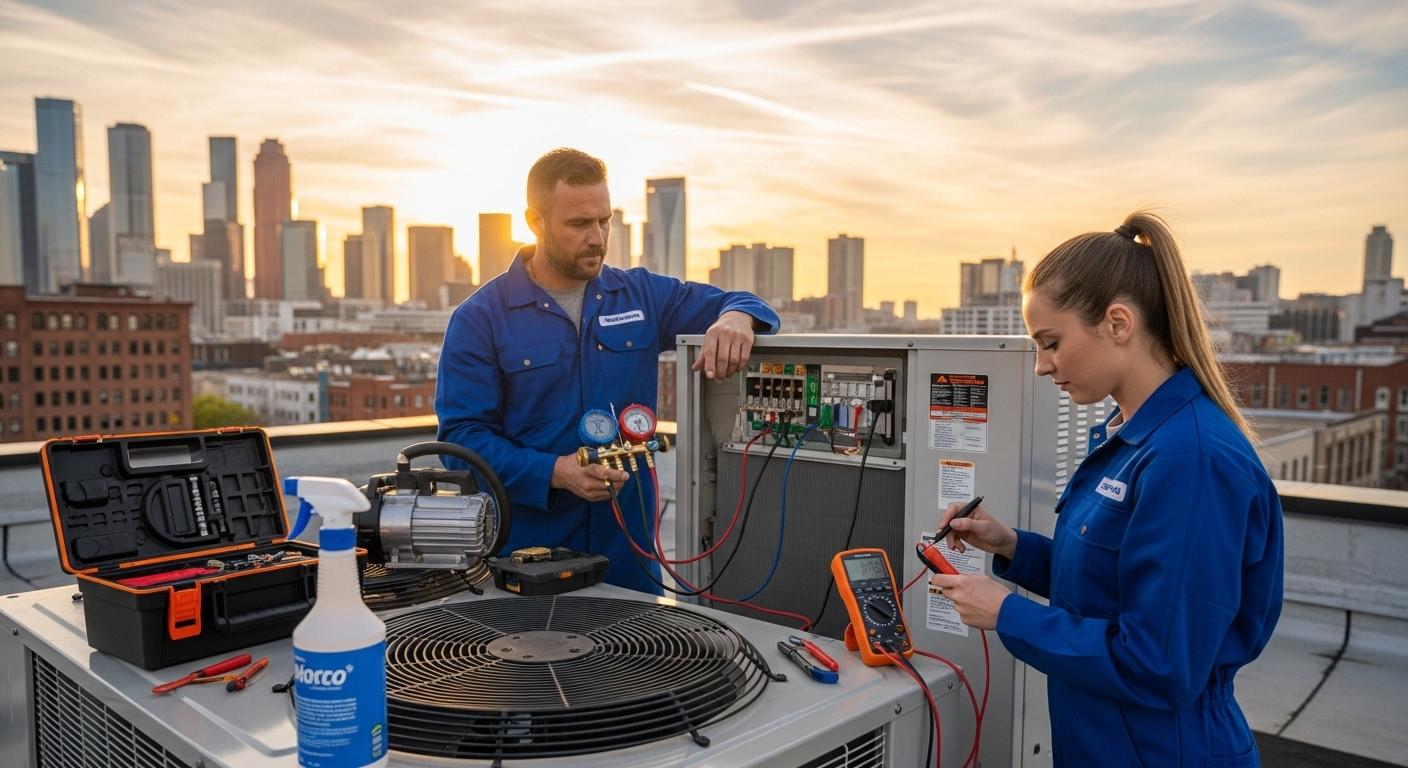
Learning HVAC basics in the US can take approximately 6 to 12 months, but to become a fully licensed and skilled HVAC technician, it might take 2 to 5 years, depending on one's educational route, state rules, and real-world experience.
What Does "Learning HVAC" Really Mean?
HVAC Knowledge vs HVAC Career Readiness
Simply learning HVAC is not just about reading up on that manual and being done with it. In the US, HVAC curriculum consists of learning about mechanical systems, electrical components, safety standards, and customer service.
Here's a pretty big gap between:
- Learning HVAC basics (theory and entry-level skills)
- Coming to a point where you can start work immediately
- Getting licensed and experienced
Generally, most people can figure out the working of HVAC equipment quite fast. However, the real skill is actually working with it in the field.
Core Skills HVAC Technicians Learn
HVAC training usually takes the trainee through the journey of understanding and working with heating systems, air conditioning units, ventilation design, refrigeration cycles, electrical wiring, and diagnostics. In the long run, technicians are expected to have developed problem-solving skills, safety knowledge, and communication skills necessary for working in American homes and job sites, where they often coordinate with contractors and rely on reliable hvac estimates to plan costs, materials, and project timelines accurately.
HVAC Training Paths in the United States
Certificate and Diploma Programs
Certificate and diploma courses will get you into the HVAC field quickly. These courses are available in trade schools, community colleges, and technical institutes throughout the US.
| Program Type | Typical Duration | Outcome |
| HVAC Certificate | 6–12 months | Entry-level technician |
| HVAC Diploma | 9–12 months | Job-ready skills focus |
These programs concentrate almost entirely on practical training and are perfect for adults who want to change their profession rapidly.
Associate Degree in HVAC
An associate degree gives a thorough education not only in technical areas but also through general education courses.
| Degree Type | Duration | Best For |
| Associate Degree (HVAC) | 18–24 months | Long-term career growth |
People who get their degrees are more likely to be able to get good jobs when they start and also become supervisors in the course of their professional lives.
Apprenticeships: The Longest but Most Solid Way
What are HVAC Apprenticeships
An apprenticeship is a combination of theoretical instructions and practical work where the apprentice is remunerated. In America, it is the majority of labor unions and businesses that provide apprenticeships.
| Apprenticeship Length | Experience Gained |
| 3–5 years | Real-world mastery |
Conducting on-the-job training allows apprentices to get paid while they learn and usually have the opportunity to finish their training with guaranteed employment.
Overview of Certification Requirements and Licensing for the US
Certification under Section 608 of the EPA
The Section 608 certification issued by the EPA is the main requirement for any person working with refrigerants in the US. Typically, the majority of pupils complete it as part of their course.
| Certification | Time Required |
| EPA 608 | A few weeks to 3 months |
State Licensing Differences
Every state in the US establishes its own set of licensing regulations. Some states require candidates to have several years of experience before they are eligible for licensing tests, while others offer quicker licensing routes through the acquisition of education credits.
Therefore, HVAC licensing duration varies across states such as California, Texas, and Florida.
What Determines the Length of HVAC Training?
Full-Time and Part-Time Students
On average, full-time students go through training programs more quickly, while part-time students often employed individuals, may take more time, but they progress steadily with their experience.
It Depends on Your Previous Experience
Individuals coming from construction or mechanical backgrounds typically grasp HVAC concepts quickly, especially when they already have experience with expert electrical estimating, as these fields share several core technical fundamentals.
Decision on Area of Focus
The skills required to handle residential HVAC, commercial HVAC, and HVACR (refrigeration) are quite different. The complexity of systems makes commercial and refrigeration tracks usually longer.
How Long Before You Can Trust Yourself on the Job?
One Who Has Just Started Vs One Who Has Experience
Comprehensive surveys of US HVAC technicians indicate that they generally achieve comfort in their work after 1 2 years of regular exposure to the field. More familiarity brings them face-to-face with different system types, local climates, and customer dealings.
Hands-on Learning Curve
Textbooks and laboratories serve as preparatory tools; however, dealing with actual residences, witnessing equipment failures, and meeting deadlines are the factors that genuinely develop HVAC professionals. This is the reason why in the US, apprenticeships and on-the-job training hold great value in the trade culture.
Is HVAC a Good Use of Your Time in the US?
Job Market and Availability
The labor market in the US suggests that jobs in the HVAC sector will continue to increase steadily, given the changing climate, aging infrastructure, and the need for more energy-efficient buildings.
Advancement in Career
Through the accumulation of experience, HVAC technicians are capable of elevating their career to:
- Being the most experienced technician in the team
- Taking on managerial roles
- Running their own business
- Providing consultancy and system design
The time spent on learning and honing the trade is an investment that will yield returns for many years.
Learning Timeline Overview (US Average)
| Stage | Time Range |
| Basic HVAC knowledge | 3–6 months |
| Entry-level job readiness | 6–12 months |
| Skilled technician level | 1–2 years |
| Licensed / expert level | 3–5 years |
Final Thoughts
Getting HVAC education in the U.S. is primarily a matter of acquiring solid skills that endure rather than rushing. No matter if you opt for a quick certificate, a college degree, or a long apprenticeship, HVAC is the trade that appreciates dedication and practical work. For those in the U.S. who want a dependable, reputable, and well-compensated trade, HVAC is still one of the most intelligent career decisions.
FAQs
1. How long does it take to learn HVAC basics in the US?
Most people can learn HVAC fundamentals in 3 to 6 months through training programs.
2. Can I work while learning HVAC?
Yes, many US programs offer part-time classes or apprenticeships that allow you to earn while learning.
3. Is HVAC difficult for beginners?
HVAC is technical but learnable. With hands-on training, beginners adapt quickly.
4. Do I need a license to work in HVAC in the US?
Licensing depends on the state, but EPA certification is mandatory nationwide.
5. Is HVAC a good long-term career in the US?
Yes, HVAC offers strong job security, steady income, and career growth.

 English
 Arabic
 French
 Spanish
 Portuguese
 Turkish
 Dutch
Dutch
 Italiano
 Russian
 Romaian
 Portuguese (Brazil)
 Greek
Greek