
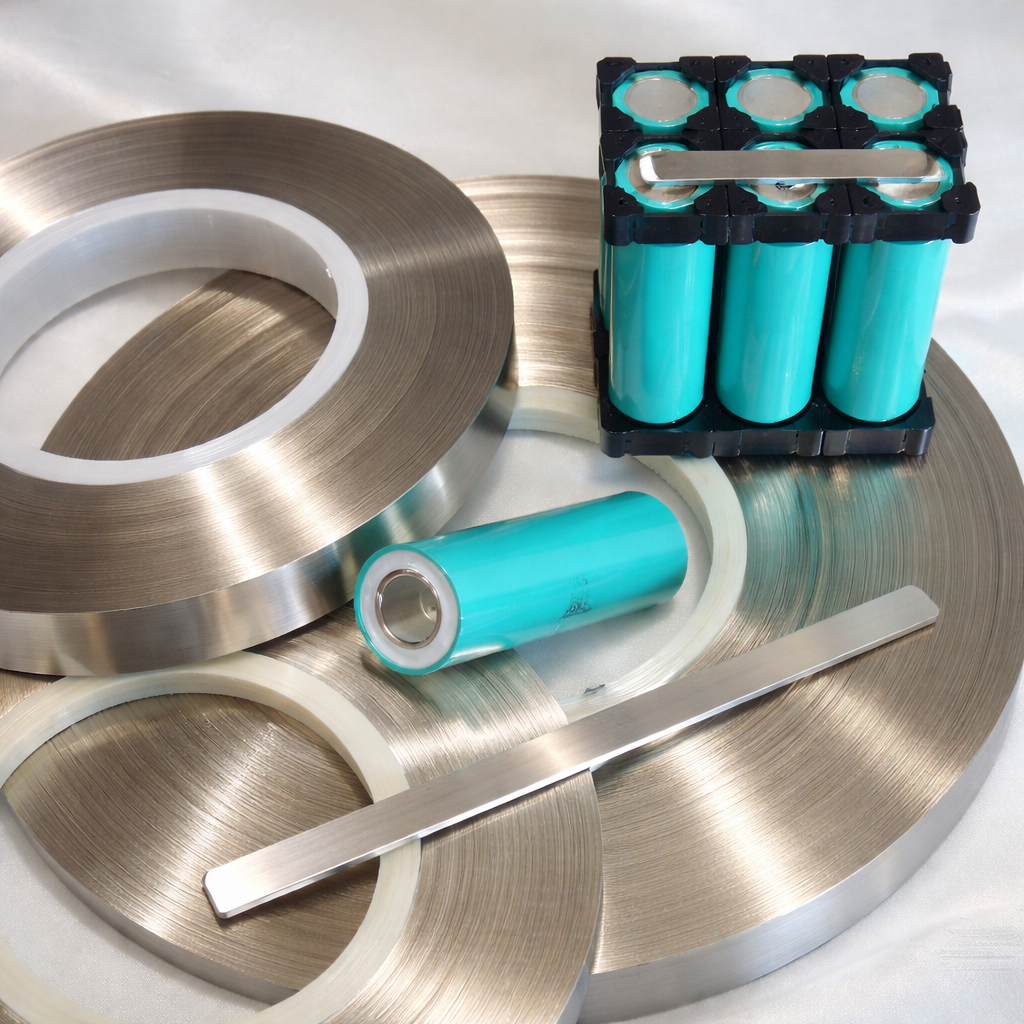
Lithium Strip is a thin, flat piece of pure lithium metal used in advanced technology and industrial applications. Lithium is the lightest metal and has one of the highest electrochemical potentials, making it extremely valuable for energy storage systems. In strip form, lithium becomes easier to handle and integrate into compact devices. Due to its high energy capacity and lightweight nature, lithium strip is widely used in batteries, research laboratories, and specialized manufacturing processes.
Physical and Chemical Properties
Lithium Strip has a soft structure and a silver-white metallic shine. It is highly reactive, especially when exposed to air or moisture. When lithium reacts with oxygen, it forms lithium oxide, and contact with water can release heat and hydrogen gas. Because of this strong reactivity, lithium strips must be stored in dry, sealed containers, often under mineral oil or inert gas. Its low density and high conductivity make it ideal for lightweight and efficient energy systems.
Manufacturing Process
The production of Lithium Strip starts with high-purity lithium metal. The metal is melted and rolled into thin sheets using advanced rolling machines. This process is carried out in oxygen-free environments to prevent oxidation and contamination. Manufacturers carefully control the thickness, width, and surface finish to meet strict industrial standards. Consistent quality is essential because lithium strip performance directly affects battery efficiency and safety.
Lithium Strip in Battery Applications
Lithium Strip is mainly used in lithium-metal batteries as the anode material. Compared to traditional graphite anodes, lithium metal offers much higher energy density. This means batteries can store more energy in less space while remaining lightweight. Lithium strip technology is used in electric vehicles, smartphones, laptops, and renewable energy storage systems. It is also a key component in the development of solid-state batteries, which promise improved safety and longer lifespan.
Industrial and Laboratory Uses
In laboratories, Lithium Strip is used for chemical reactions and material research. Lithium acts as a strong reducing agent and supports the development of new compounds. In industrial settings, lithium may be used to produce special alloys and high-performance materials. The strip form allows precise measurement and controlled application, making it suitable for scientific experiments and technical processes.
Advantages of Lithium Strip
Lithium Strip offers several advantages, including high energy storage capacity, lightweight design, and excellent electrical conductivity. Its thin structure makes it easy to integrate into compact electronic systems. Lithium metal also enables faster charging and improved efficiency compared to many alternative materials. These benefits make lithium strip a critical material in modern energy solutions and advanced technology development.
Safety and Handling Guidelines
Due to its chemical reactivity, Lithium Strip must be handled carefully. It should be stored in airtight containers and kept away from water and humid environments. Protective gloves and safety glasses should be used during handling. Proper storage under mineral oil or inert gas helps prevent unwanted reactions. Following safety procedures ensures secure transportation and long-term stability.
Future Potential and Innovation
As global demand for clean energy increases, Lithium Strip will continue to play an important role in next-generation battery technology. Researchers are working to reduce issues such as dendrite formation in lithium-metal batteries. Advanced coatings and improved battery designs are being developed to enhance performance and safety. In the future, lithium strip is expected to support sustainable energy growth and technological innovation worldwide.
Conclusion
Lithium Strip is a powerful and valuable material used in batteries, research, and industrial applications. Its high energy density and lightweight properties make it ideal for modern electronic devices and renewable energy systems. Although it requires careful handling, ongoing research continues to improve its performance and safety. Lithium strip remains a key component in shaping the future of energy storage technology.

 English
 Arabic
 French
 Spanish
 Portuguese
 Deutsch
 Turkish
 Dutch
Dutch
 Italiano
 Romaian
 Portuguese (Brazil)
 Greek
Greek