
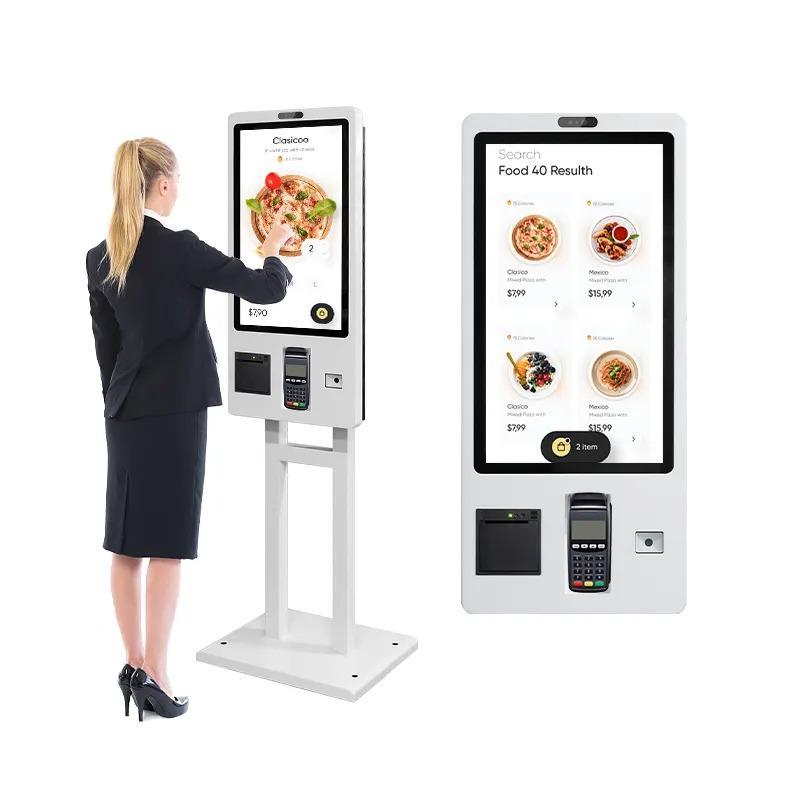
As businesses continue adapting to customer expectations for convenience, speed, and personalized experiences, self service kiosk technology is rapidly evolving. In 2026, we're seeing trends that go beyond simple touchscreens — these trends are transforming how people interact with businesses across retail, hospitality, healthcare, transportation, and more. This article dives into major self service kiosk trends that are shaping the customer experience landscape in 2026.
1. AI-Powered Personalization
Artificial intelligence (AI) has become a driving force behind the next generation of self-service kiosk solutions. With advanced machine learning models and computer vision, kiosks can now:
-
Recognize returning customers and display personalized recommendations
-
Learn preferences over time to speed up menu choices
-
Predict popular items based on time of day, weather, or location
By tailoring interactions to individual users, businesses can increase sales and customer satisfaction without human intervention.
2. Contactless and Touchless Interfaces
Even as the world moves past the peak of the pandemic, hygiene remains a priority for many customers. Contactless self-service kiosk trends continue to grow, with:
-
Gesture-based controls using motion sensors
-
QR-code triggered browsing and ordering on personal devices
-
Voice UI options for hands-free operations
These touchless technologies offer safer, faster, and more inclusive user experiences than traditional touchscreens.
3. Integration with Mobile Apps and Wallets
In 2026, seamless interoperability between self service kiosk systems and mobile devices is a must-have feature. Customers expect to:
-
Scan mobile tickets or QR codes at kiosks for quick check-ins
-
Sync loyalty accounts in real time
-
Use mobile wallets for instant payments
This integration not only enhances convenience but also allows brands to capture valuable behavioral data across channels.
4. Enhanced Payment Flexibility
Payment trends in 2026 emphasize convenience and speed. Self service kiosk solutions now support:
-
Multiple digital payment options, including Apple Pay, Google Wallet, and cryptocurrency
-
Buy Now, Pay Later (BNPL) services
-
Biometric payment authorizations (e.g. fingerprint or facial authentication)
These payment innovations help reduce abandoned transactions and cater to broader customer preferences.
5. Faster and Smarter Checkout
Long queues remain a pain point for customers in retail and food service. To address this, self service kiosk systems are adopting faster checkout flows with:
-
Intelligent item scanning using AI-based computer vision
-
Automatic recommendations for frequent purchases
-
Frictionless bagging and checkout processes
These enhancements improve throughput in high-traffic locations like airports, supermarkets, and quick-service restaurants.
6. Omnichannel Integration
Customers increasingly expect consistent experiences across all touchpoints. Self service kiosk technology is now designed to integrate with:
-
E‑commerce platforms
-
In‑store inventory systems
-
Customer loyalty programs
-
Chatbots and virtual assistants
This unified ecosystem ensures customers can start an interaction on their mobile device and finish it at a kiosk — or vice versa — without losing context.
7. Vertical-Specific Customization
Different industries require tailored self service kiosk features:
-
Retail: Virtual try‑on and style recommendations
-
Healthcare: Patient check‑in and symptom triage
-
Hospitality: Automated concierge and room check‑in
-
Transportation: Ticket purchase and wayfinding
Customization helps businesses deliver value‑added services while simplifying interactions.
8. Sustainability and Eco‑Friendly Designs
Eco‑conscious design is entering the kiosk space. Trends in 2026 include:
-
Energy‑efficient hardware
-
Recycled or recyclable materials
-
Digital receipts to reduce paper waste
-
Smart power management based on usage patterns
Sustainability not only aligns with brand values but also reduces operational costs.
9. Cloud‑Based Management and Analytics
Modern self service kiosk deployments rely on cloud infrastructure to deliver scalability and business insights. Key benefits include:
-
Remote maintenance and updates
-
Real‑time performance tracking
-
Customer behavior analytics
-
A/B testing of UI layouts and promotions
Cloud connectivity also enables rapid deployment of new features across multiple locations.
10. Security and Privacy Enhancements
As kiosks store more customer data and integrate with payment systems, security becomes critical. In 2026, self-service kiosk trends focus on:
-
End-to-end encryption for data security
-
Biometric authentication for identity verification
-
Clear privacy disclosures to build trust
-
Compliance with global data protection regulations
These measures build confidence among users and mitigate risks for businesses.
Conclusion
The self-service kiosk landscape in 2026 is defined by intelligent automation, personalized customer experiences, and seamless integration across digital and physical channels. From contactless interactions to cloud‑powered insights, these trends are empowering businesses to rethink how they serve customers — efficiently, securely, and sustainably. As technology continues to evolve, the possibilities for self-service kiosks are greater than ever.

 English
 Arabic
 French
 Spanish
 Portuguese
 Deutsch
 Turkish
 Dutch
Dutch
 Italiano
 Russian
 Romaian
 Portuguese (Brazil)