
Introduction
Have you ever noticed oily, greasy stool along with diarrhea and wondered, “Is this normal?” You’re not alone. Many people experience this but hesitate to talk about it. The truth is, fat with diarrhea (also called fatty stool or steatorrhea) can be your body’s way of signaling that something isn’t quite right—especially with digestion or liver function.
Think of your digestive system like a well-organized kitchen. If one step fails—like improper oil handling—the whole recipe goes off. Similarly, when your body can’t absorb fats properly, they pass out through stool, causing diarrhea.
Let’s break this down in simple terms so you can understand what’s happening, why it matters, and when you should take action.
Fat with diarrhea explained simply. Know causes, symptoms & when to see the best liver transplant specialist in Delhi
1. What Does Fat with Diarrhea Mean?
Fat with diarrhea means your stool contains excess fat that hasn’t been digested properly. It often looks:
-
Greasy or oily
-
Pale or yellowish
-
Foul-smelling
-
Difficult to flush
This condition is medically called steatorrhea.
2. How Normal Digestion of Fat Works
To understand the problem, let’s look at how things should work.
Your body needs three main helpers to digest fat:
-
Liver – produces bile
-
Gallbladder – stores and releases bile
-
Pancreas – releases digestive enzymes
Bile acts like a detergent that breaks fat into smaller pieces so your body can absorb it.
If any of these steps fail, fat remains undigested—leading to diarrhea.
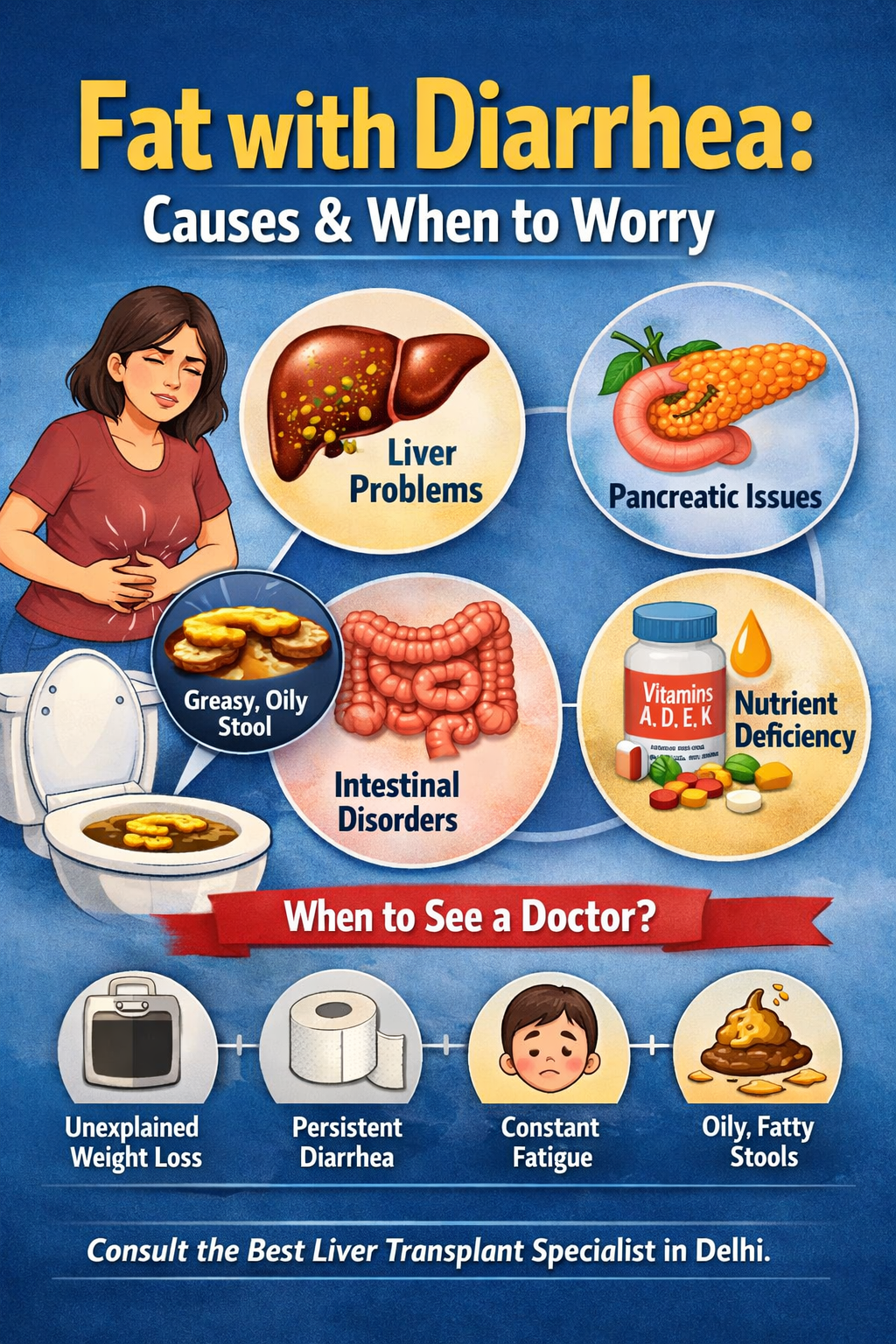
3. Common Causes of Fatty Diarrhea
There are several reasons why this can happen:
✔ Liver Disease
-
Fatty liver
-
Hepatitis
-
Cirrhosis
✔ Pancreatic Problems
-
Pancreatitis
-
Pancreatic insufficiency
✔ Intestinal Issues
-
Celiac disease
-
Crohn’s disease
✔ Infections
-
Parasites like Giardia
✔ Post-Surgery Effects
-
Gallbladder removal
4. Role of Liver in Fat Digestion
Your liver is like the “oil manager” of your body.
It produces bile, which helps break down fats. If your liver is damaged:
-
Bile production reduces
-
Fat digestion becomes poor
-
Fat exits through stool
That’s why people with liver problems often experience fatty diarrhea.
5. Symptoms You Should Not Ignore
Here are warning signs to watch:
-
Persistent diarrhea
-
Greasy stool
-
Weight loss
-
Bloating and gas
-
Weakness or fatigue
If you notice these regularly, your body is asking for help.
6. Fatty Liver and Diarrhea Connection
Fatty liver disease is becoming very common, especially due to:
-
Poor diet
-
Lack of exercise
-
Obesity
While early stages may not show symptoms, advanced stages can affect digestion, leading to:
-
Improper bile flow
-
Fat malabsorption
-
Loose stools
7. Pancreas and Digestive Enzymes
The pancreas releases enzymes that break down fats.
If it doesn’t work properly:
-
Fat stays undigested
-
Stool becomes oily
-
Nutrients are lost
This condition is known as pancreatic insufficiency.
8. Intestinal Disorders Behind the Problem
Sometimes the issue isn’t digestion—it’s absorption.
Conditions like:
-
Celiac disease
-
Crohn’s disease
Damage the intestinal lining, preventing proper absorption of fats.
9. When Should You See a Doctor?
Don’t ignore your symptoms if:
-
Diarrhea lasts more than 3 days
-
You lose weight without trying
-
You feel constant fatigue
-
Stool looks consistently oily
In such cases, consulting a best liver transplant specialist in delhi can help identify if the issue is liver-related.
10. Diagnosis and Tests
Doctors may recommend:
-
Stool tests – to detect fat content
-
Blood tests – for liver function
-
Ultrasound or CT scan
-
Endoscopy (if needed)
These tests help find the root cause.
11. Treatment Options
Treatment depends on the cause:
✔ For Liver Issues
-
Medications
-
Lifestyle changes
-
Advanced care if needed
✔ For Pancreatic Issues
-
Enzyme supplements
✔ For Intestinal Disorders
-
Gluten-free diet (for celiac)
-
Anti-inflammatory medicines
12. Diet Tips for Managing Symptoms
Your diet plays a huge role.
Eat This:
-
Fruits and vegetables
-
Lean proteins
-
Whole grains
Avoid This:
-
Fried foods
-
Excess oil
-
Processed snacks
Pro Tip:
Eat smaller meals—your body handles fat better this way.
13. Lifestyle Changes That Help
Simple habits can make a big difference:
-
Exercise regularly
-
Stay hydrated
-
Avoid alcohol
-
Maintain a healthy weight
Think of it as giving your digestive system a “reset button.”
14. Complications if Ignored
Ignoring fatty diarrhea can lead to:
-
Malnutrition
-
Vitamin deficiencies (A, D, E, K)
-
Severe liver damage
-
Weak immunity
Over time, it can become serious if untreated.
15. Prevention Tips
Want to stay safe? Follow these:
-
Eat balanced meals
-
Avoid excessive alcohol
-
Get regular health checkups
-
Manage weight
Prevention is always easier than treatment.
Conclusion
Fat with diarrhea might seem like a minor issue at first, but it can signal deeper problems—especially related to your liver, pancreas, or intestines. Listening to your body early can save you from bigger complications later.
If symptoms persist, don’t delay seeking medical advice. Sometimes, consulting the best liver transplant specialist in delhi can make all the difference in early diagnosis and proper care.
Your body talks—you just need to pay attention.
FAQs
1. What causes fat in diarrhea?
Fat in diarrhea is usually caused by poor fat digestion due to liver, pancreas, or intestinal problems.
2. Is fatty diarrhea dangerous?
Yes, if persistent, it can lead to malnutrition and indicate serious health conditions.
3. Can fatty liver cause diarrhea?
Yes, advanced fatty liver can affect bile production, leading to fat malabsorption and diarrhea.
4. How is fatty diarrhea treated?
Treatment depends on the cause and may include medications, diet changes, or enzyme supplements.
5. When should I see a doctor for diarrhea?
If diarrhea lasts more than 2–3 days or includes oily stool, weight loss, or fatigue, consult a doctor immediately.

 English
 Arabic
 French
 Spanish
 Deutsch
 Turkish
 Dutch
Dutch
 Italiano
 Russian
 Romaian
 Portuguese (Brazil)
 Greek
Greek