
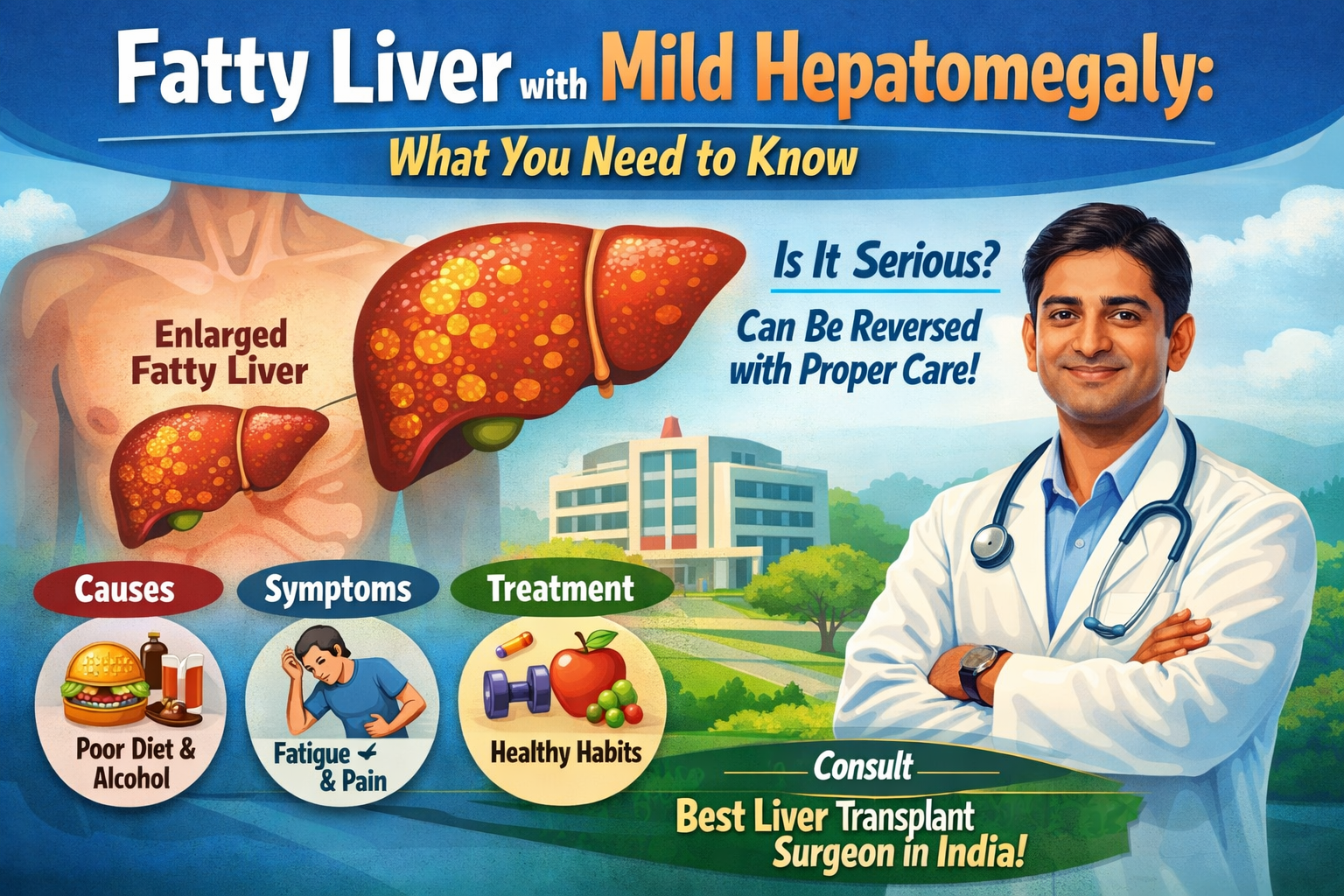
Introduction
Have you ever come across a medical report that says “fatty liver with mild hepatomegaly” and felt confused or even a little scared? You’re not alone. Many people in India are seeing this diagnosis during routine health check-ups—and wondering what it actually means.
Let’s break it down in simple terms. Think of your liver like a hardworking factory. When fat starts accumulating and the liver becomes slightly enlarged (that’s what mild hepatomegaly means), the factory gets overloaded. It still works—but not as efficiently as before.
The good news? In most cases, this condition is reversible, especially if caught early. So instead of panic, what you really need is the right knowledge—and a plan.
1. What is Fatty Liver?
Fatty liver happens when excess fat builds up in liver cells. Normally, the liver contains a small amount of fat—but when it exceeds 5–10%, it becomes a concern.
There are two main types:
-
Non-alcoholic fatty liver disease (NAFLD) – Most common in India
-
Alcoholic fatty liver disease – Caused by excessive alcohol intake
Think of it like oil clogging a machine. A little is okay—but too much slows everything down.
2. What Does Mild Hepatomegaly Mean?
Hepatomegaly simply means enlargement of the liver.
-
Mild hepatomegaly = Slight increase in liver size
-
Often detected via ultrasound
It’s like your liver is slightly swollen due to stress—usually from fat accumulation or inflammation.
3. Why Do These Conditions Occur Together?
Fatty liver and mild hepatomegaly often go hand-in-hand.
Here’s why:
-
Fat buildup causes inflammation
-
Inflammation leads to swelling
-
Swelling results in enlargement
So basically, fatty liver → irritation → enlargement
4. Types of Fatty Liver Disease
Understanding the type helps guide treatment:
Non-Alcoholic Fatty Liver Disease (NAFLD)
-
Linked to obesity, diabetes, and poor lifestyle
-
Very common in urban India
Non-Alcoholic Steatohepatitis (NASH)
-
A more serious form
-
Includes inflammation and liver damage
Alcoholic Fatty Liver
-
Caused by long-term alcohol consumption
5. Common Causes
Let’s get real—most causes are lifestyle-related:
-
Unhealthy diet (junk food, fried food)
-
Obesity
-
Diabetes
-
High cholesterol
-
Sedentary lifestyle
-
Alcohol consumption
It’s like slowly overloading your liver day after day.
6. Symptoms You Should Watch
Here’s the tricky part—many people feel nothing.
But some may notice:
-
Fatigue
-
Mild pain in upper right abdomen
-
Bloating
-
Weight gain
Because symptoms are subtle, many cases are found accidentally during tests.
7. Is It Dangerous?
Short answer: It can be—if ignored.
Early-stage fatty liver with mild hepatomegaly is usually reversible.
But if untreated, it can progress to:
-
Liver inflammation
-
Fibrosis (scarring)
-
Cirrhosis
-
Liver failure
That’s why early action matters.
8. Diagnosis and Tests
Doctors use a combination of:
Blood Tests
-
Liver function tests (LFT)
Imaging
-
Ultrasound (most common)
-
CT scan or MRI (if needed)
Fibroscan
-
Measures liver stiffness
Liver Biopsy
-
Rare but definitive
9. Treatment Options
There’s no magic pill—but don’t worry, it’s manageable.
Medications
-
For diabetes, cholesterol, or liver protection
Lifestyle Correction
-
The most important step
Monitoring
-
Regular follow-ups
10. Diet for Fatty Liver
Food can either heal or harm your liver.
Eat More Of:
-
Fruits and vegetables
-
Whole grains
-
Lean protein
-
Nuts and seeds
Avoid:
-
Sugar
-
Fried food
-
Processed snacks
-
Alcohol
Think of your diet as a daily “reset button” for your liver.
11. Lifestyle Changes
Here’s where real transformation happens:
-
Exercise 30–45 minutes daily
-
Lose 5–10% of body weight
-
Sleep well
-
Manage stress
Even small steps—like walking after meals—make a big difference.
12. When is Surgery Needed?
Most cases don’t require surgery.
However, in advanced stages:
-
Liver damage may become irreversible
-
A transplant might be needed
In such situations, consulting the best liver transplant surgeon in india can be life-saving.
13. Prevention Tips
Prevention is easier than treatment:
-
Maintain healthy weight
-
Eat balanced diet
-
Avoid alcohol
-
Regular health check-ups
Your liver doesn’t complain early—so you have to stay proactive.
14. When to See a Specialist
You should consult a doctor if:
-
Your reports show fatty liver
-
You have diabetes or obesity
-
You feel persistent fatigue
Early consultation can prevent complications.
15. Final Thoughts
Getting diagnosed with fatty liver with mild hepatomegaly might sound alarming—but here’s the truth: it’s often your body’s early warning system, not a final verdict.
If you act now—through better food, regular exercise, and medical guidance—you can completely turn things around.
Think of it this way: your liver is asking for a little care today so it doesn’t demand serious treatment tomorrow.
FAQs
1. Can fatty liver with mild hepatomegaly be reversed?
Yes, in most cases, it is completely reversible with lifestyle changes and proper care.
2. Is fatty liver serious?
It can become serious if untreated, but early stages are manageable and reversible.
3. How long does it take to recover?
With proper diet and exercise, improvement can be seen within a few months.
4. Can I live a normal life with this condition?
Absolutely. With the right lifestyle, you can live a healthy and normal life.
5. When should I consider a liver transplant?
Only in advanced stages like cirrhosis or liver failure—consult the best liver transplant surgeon in india for evaluation.

 Arabic
 French
 Spanish
 Portuguese
 Deutsch
 Turkish
 Dutch
Dutch
 Italiano
 Russian
 Romaian
 Portuguese (Brazil)
 Greek
Greek