
Introduction
Have you ever looked at your urine and thought, “That doesn’t look right…”? Maybe it appeared darker than usual—almost like cola or tea. While it might be tempting to ignore it, your body could actually be trying to send you an important message.
Think of your urine as a “daily health report.” Just like a warning light on your car dashboard, changes in color can indicate something going on inside your body. One of the most common concerns? Whether dark urine is a sign of liver disease.
In this article, we’ll break it all down in simple, easy-to-understand language—so you know when to relax and when to take action.
Dark urine could signal liver issues. Learn causes, symptoms, and when to consult the best liver transplant surgeon in india
1. What Does Normal Urine Look Like?
Your urine should typically be light yellow to pale straw color. This color comes from a pigment called urochrome.
Key point:
The lighter your urine, the better hydrated you are.
If it starts getting darker, your body might be telling you something-- either you need more water or something deeper is happening.
2. What Is Considered Dark Urine?
Dark urine usually appears:
Deep yellow
Amber
Brownish
Tea or cola-colored
Important:
If your urine looks like strong tea or cola, it's not normal and should not be ignored.
3. Common Causes of Dark Urine
Before jumping to conclusions about liver disease, let's look at some common (and harmless) reasons.
a) Dehydration
Not drinking enough water is the most common cause.
b) Certain Foods
Foods like:
Beetroot
Blackberries
Food coloring
can temporarily change urine color.
c) Medications
Some antibiotics, vitamins, or laxatives may darken urine.
Key takeaway:
Not all dark urine is dangerous-- but it depends on the situation.
4. How the Liver Affects Urine Color
Here's where things get interesting.
Your liver plays a big role in processing bilirubin, a yellow substance formed when red blood cells break down.
Normally:
Bilirubin is processed by the liver
It exits through stool
But when the liver isn't working properly:
Bilirubin builds up in the blood
It spills into urine
Result? Dark-colored urine.
Think of your liver like a filter. When the filter gets clogged, waste starts showing up where it shouldn't-- like in your urine.
5. Dark Urine and Liver Disease Connection
So, is dark urine a sign of liver disease?
Yes-- sometimes.
When your liver is damaged or inflamed, it struggles to process bilirubin. This leads to:
Dark urine
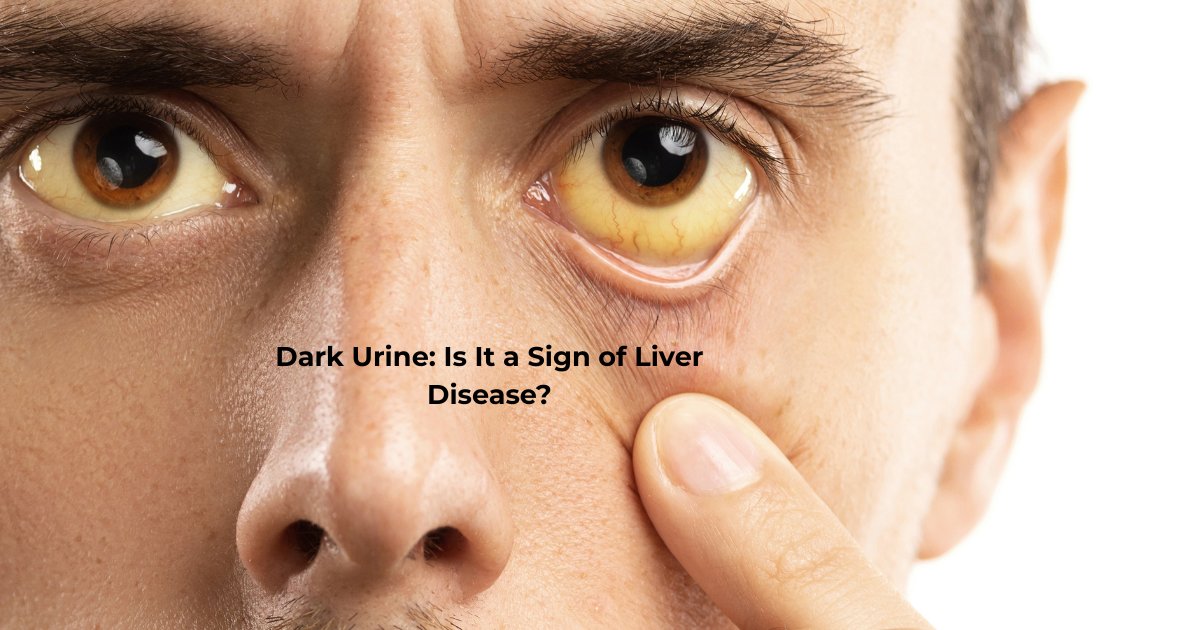
Yellowing of eyes (jaundice).
Fatigue.
Key point:.
Dark urine alone isn't enough to confirm liver disease-- but combined with other symptoms, it becomes a warning sign.
6. Key Liver Conditions Linked to Dark Urine.
Several liver conditions can cause dark urine:.
a) Hepatitis.
Inflammation of the liver due to infection or toxins.
b) Liver Cirrhosis.
Scarring of liver tissue over time.
c) Fatty Liver Disease.
Common in people with obesity or diabetes.
d) Liver Cancer.
A more serious condition affecting liver function.
e) Bile Duct Obstruction.
Blocks the flow of bile, leading to bilirubin buildup.
7. Other Symptoms to Watch Alongside Dark Urine.
Dark urine rarely comes alone in liver disease.
Look out for:.
Yellow skin or eyes (jaundice).
Pale stools.
Abdominal pain (especially right side).
Fatigue and weakness.
Nausea or vomiting.
Loss of appetite.
Important:.
If you notice 2-- 3 of these symptoms together, don't delay medical advice.
8. When Should You See a Doctor?
Ask yourself:.
Has the dark urine lasted more than 2-- 3 days?
Are you well hydrated but still noticing dark color?
Do you have other symptoms like jaundice?
If the answer is yes, it's time to consult a doctor.
Don't ignore persistent changes. Early detection can save lives.
9. How Doctors Diagnose Liver Problems.
Doctors may recommend:.
Blood Tests.
To check liver enzyme levels.
Urine Tests.
To detect bilirubin presence.
Ultrasound or CT Scan.
To view liver structure.
Liver Biopsy (if needed).
To confirm diagnosis.
Key point:.
Diagnosis is usually simple and painless in most cases.
10. Treatment Options for Liver-Related Dark Urine.
Treatment depends on the cause:.
Hydration (if dehydration).
Medications for infections or inflammation.
Lifestyle changes for fatty liver.
Surgery in severe conditions.
Good news:.
Many liver conditions are reversible if caught early.
11. Role of Liver Transplant in Severe Cases.
In advanced liver disease, when the liver is no longer functioning, a liver transplant may be required.
This involves replacing the damaged liver with a healthy one.
If you or your loved one is facing such a situation, consulting the best liver transplant surgeon in india can significantly improve outcomes.
Why expertise matters:.
Better surgical success rates.
Faster recovery.
Lower complications.
12. Simple Tips to Prevent Liver Issues.
Prevention is always better than cure.
Stay Hydrated.
Drink enough water daily.
Eat Healthy.
Include fruits, vegetables, and low-fat foods.
Avoid Alcohol Abuse.
Excess alcohol damages liver cells.
Exercise Regularly.
Helps prevent fatty liver.
Vaccination.
Protect yourself against hepatitis.
13. Myths vs Facts About Dark Urine.
MythFact.
Dark urine always means liver diseaseIt can also be due to dehydration.
Only alcoholics get liver diseaseAnyone can be affected.
If symptoms go away, you're fineSome liver issues are silent.
14. When Dark Urine Is Harmless.
Sometimes, dark urine is temporary and harmless:.
After intense exercise.
Due to certain medications.
Morning urine (more concentrated).
Tip:.
If the color returns to normal after hydration, it's usually not serious.
15. Final Thoughts.
Dark urine might seem like a small issue, but it can sometimes point to something bigger-- especially when linked to liver health.
The key is awareness. Don't panic, but don't ignore it either.
Your body speaks in subtle ways, and urine color is one of them. Listen carefully, stay hydrated, and seek medical advice when needed. And remember-- early action can make all the difference.
FAQs.
1. Is dark urine always a sign of liver disease?
No, it can also be caused by dehydration, foods, or medications. But persistent dark urine should be checked.
2. How do I know if my dark urine is serious?
If it lasts more than a few days or comes with symptoms like jaundice or fatigue, consult a doctor.
3. Can drinking more water fix dark urine?
Yes, if dehydration is the cause. If not, further evaluation is needed.
4. Which color of urine indicates liver problems?
Tea-colored or cola-colored urine may indicate liver issues due to excess bilirubin.
5. When is a liver transplant needed?
A transplant is required in severe liver failure when the liver can no longer function properly.

 English
 Arabic
 French
 Spanish
 Deutsch
 Turkish
 Dutch
Dutch
 Italiano
 Russian
 Romaian
 Portuguese (Brazil)
 Greek
Greek