
Introduction
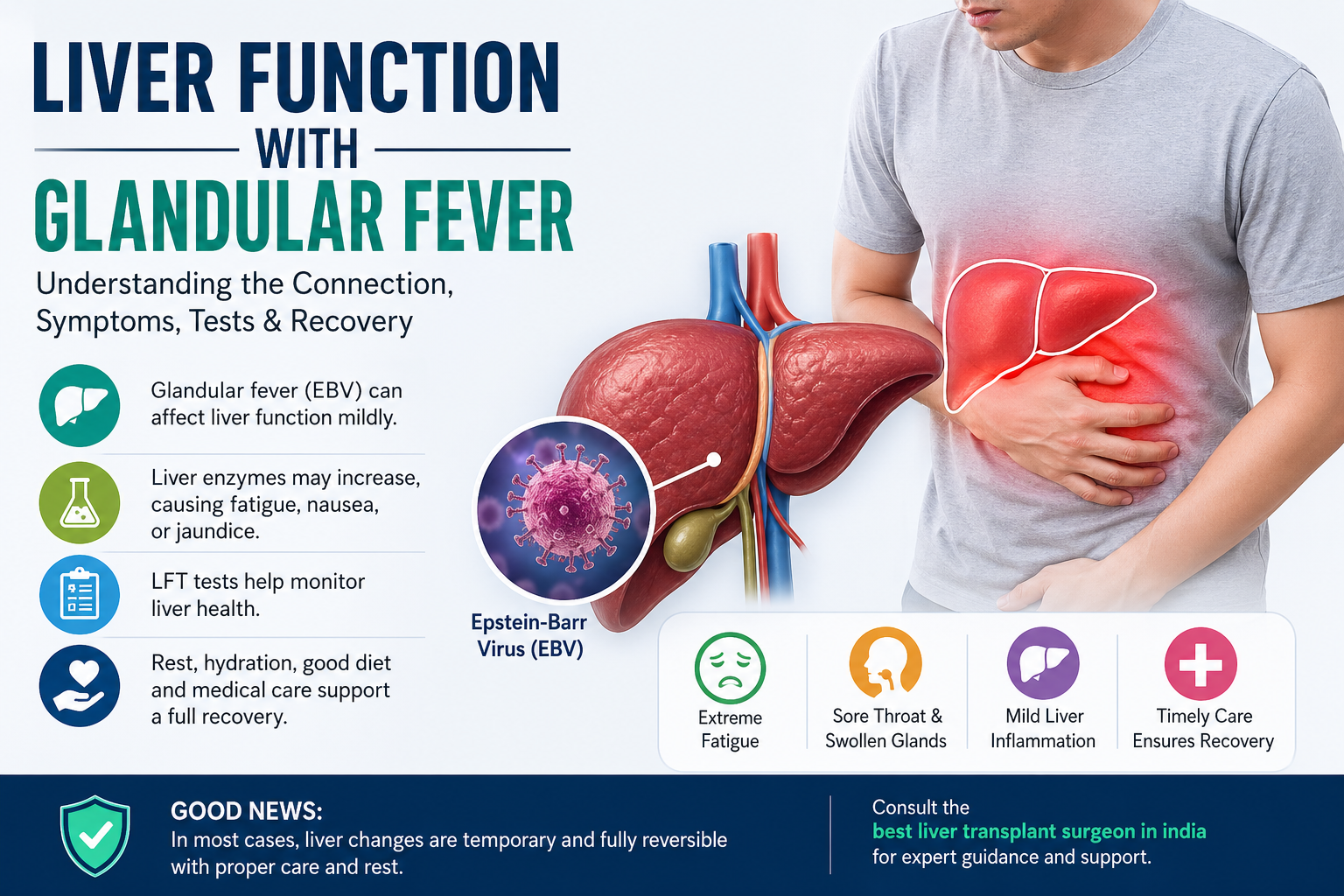
Have you ever had a viral infection that left you feeling completely drained, with unusual fatigue and body aches? That’s exactly how glandular fever—commonly caused by the Epstein-Barr Virus—can feel. While most people think of it as just a throat infection or fatigue illness, it can also quietly affect your liver.
Yes, your liver—the body’s natural “filter”—can get involved too. But how serious is it? Should you worry? Or is it just a temporary phase?
In this guide, we’ll break everything down in simple terms so you can understand what happens to liver function during glandular fever, what signs to watch for, and when to seek help.
erstand liver function changes in glandular fever, symptoms, tests, recovery tips, and expert guidance from the best liver transplant surgeon in india
1. What Is Glandular Fever?
Glandular fever, also known as infectious mononucleosis, is a viral illness caused mainly by EBV.
Key Features:
- Extreme tiredness
- Sore throat
- Swollen lymph nodes
- Fever
Think of it like your body fighting a long battle—it drains your energy and affects multiple systems, including the liver.
2. How Does the Liver Work?
Your liver is like a 24/7 cleaning machine in your body.
Main Functions:
- Filters toxins from blood
- Helps digest food
- Stores energy
- Produces essential proteins
When it’s affected, even mildly, your whole system can feel off.
3. Why Does Glandular Fever Affect the Liver?
Here’s the interesting part.
The virus doesn’t directly “attack” the liver like some other infections. Instead, your immune system’s response causes inflammation.
Simple Analogy:
Imagine your immune system as a security team. While trying to catch an intruder (virus), it accidentally creates chaos in nearby rooms—including the liver.
4. Common Liver-Related Symptoms
Most people don’t even realize their liver is involved because symptoms can be mild.
Watch for These Signs:
- Mild pain in the upper right abdomen
- Yellowing of eyes or skin (jaundice)
- Dark urine
- Loss of appetite
- Nausea
👉 Important: These symptoms are usually temporary.
5. Understanding Liver Function Tests (LFTs)
Doctors often recommend LFTs to check liver health.
What Do They Measure?
- ALT (Alanine aminotransferase)
- AST (Aspartate aminotransferase)
- Bilirubin levels
What Happens in Glandular Fever?
- Mild to moderate increase in liver enzymes
- Rarely severe abnormalities
Think of LFTs as a report card for your liver.
6. How Common Is Liver Involvement?
Surprisingly, liver involvement is quite common.
Statistics:
- Around 80–90% of patients show mild liver enzyme elevation
- Only a small percentage develop noticeable symptoms
So yes, it’s common—but rarely dangerous.
7. Is Liver Damage Permanent?
Good news—in most cases, no.
Key Points:
- Liver inflammation is usually temporary
- The liver heals itself over time
- Permanent damage is extremely rare
Your liver is one of the few organs that can regenerate itself—almost like a superhero!
8. Risk Factors for Severe Liver Issues
Although rare, some people may experience more serious liver problems.
Higher Risk Groups:
- People with pre-existing liver disease
- Heavy alcohol users
- Weak immune system
- Older adults
If you fall into these categories, extra care is important.
9. Diagnosis and Medical Evaluation
Doctors diagnose glandular fever through:
Tests Include:
- Blood tests for EBV
- Liver function tests
- Physical examination
In some cases, imaging like ultrasound may be recommended.
10. Treatment and Management
There is no specific antiviral treatment for glandular fever.
What Helps?
- Rest (very important!)
- Hydration
- Pain relievers (as prescribed)
Avoid:
- Alcohol
- Heavy medications without doctor advice
Treatment focuses on supporting the body while it heals itself.
11. Diet and Lifestyle Tips
Your liver needs gentle care during recovery.
Best Foods:
- Fruits and vegetables
- Whole grains
- Lean protein
Avoid:
- Oily food
- Alcohol
- Processed items
👉 Think of your liver like a tired worker—it needs light, healthy fuel to recover.
12. When to See a Doctor?
Don’t ignore warning signs.
Seek Medical Help If:
- Yellowing of eyes increases
- Severe abdominal pain
- Persistent vomiting
- Extreme fatigue lasting weeks
Early consultation can prevent complications.
13. Role of Specialists in Liver Care
In rare cases where complications arise, consulting a liver expert is essential.
If liver damage becomes severe (very uncommon), guidance from the best liver transplant surgeon in india can make a life-saving difference.
Why Specialists Matter:
- Accurate diagnosis
- Advanced treatment options
- Monitoring long-term liver health
14. Recovery Timeline
Recovery varies from person to person.
Typical Duration:
- Fatigue: 2–6 weeks
- Liver function normalization: 4–8 weeks
Some people may feel tired for longer, but liver recovery is usually complete.
15. Prevention Tips
There’s no vaccine for EBV yet, but you can reduce risk.
Simple Steps:
- Avoid sharing utensils
- Maintain hygiene
- Strengthen immunity
Prevention is always better than cure.
Conclusion
Glandular fever might sound scary, especially when you hear it can affect your liver. But here’s the reassuring truth—most liver involvement is mild, temporary, and completely reversible.
Your liver is strong, resilient, and capable of healing itself with proper care. By staying informed, eating right, and listening to your body, you can recover smoothly.
And in rare cases where complications arise, expert care—including consultation with the best liver transplant surgeon in india—ensures you’re in safe hands.
FAQs
1. Does glandular fever always affect the liver?
No, but mild liver involvement is common. Most cases are not serious.
2. Can glandular fever cause permanent liver damage?
Permanent damage is extremely rare. The liver usually heals completely.
3. How long does it take for liver function to return to normal?
Typically within 4–8 weeks after recovery.
4. Should I avoid alcohol during glandular fever?
Yes, completely. Alcohol can worsen liver inflammation.
5. When should I consult a liver specialist?
If symptoms like jaundice worsen or LFT levels remain high, consult a specialist immediately.

 Arabic
 French
 Spanish
 Portuguese
 Deutsch
 Turkish
 Dutch
Dutch
 Italiano
 Russian
 Romaian
 Portuguese (Brazil)
 Greek
Greek