
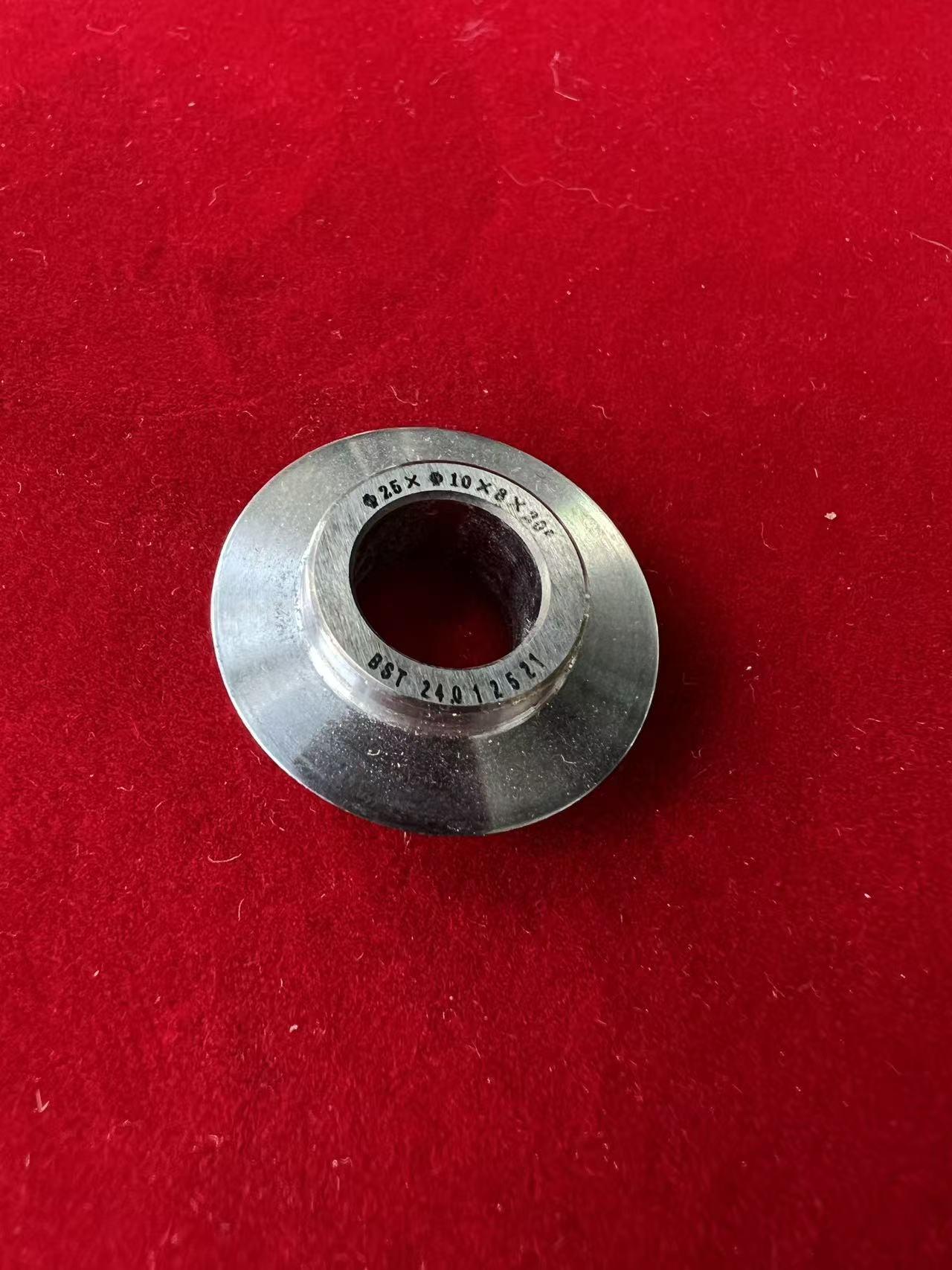
Copper tubes are widely applied in HVAC systems, plumbing, refrigeration and industrial pipelines due to their excellent thermal conductivity, corrosion resistance and ductility. Cutting copper tubes accurately and smoothly is a basic requirement in installation and processing work. Unlike hard steel materials, copper is a soft non-ferrous metal that is prone to burrs, deformation and material adhesion during cutting. Therefore, selecting a suitable blade is critical to ensure neat cuts, avoid tube damage and improve working efficiency. This article introduces the common types of blades for cutting copper tubes, along with their characteristics and applicable scenarios.
1. Tubing Cutter Blades
Tubing cutter blades are the most widely used professional blades for manual copper tube cutting, favored by plumbing and maintenance workers. These blades are generally made of high-quality carbon steel or alloy steel with a compact wheel-shaped structure. Their smooth and sharp circular cutting edge can squeeze and cut copper tubes without producing excessive metal scraps. Most tubing cutter blades are equipped with bearing structures, which reduce friction during rotation and make labor-saving cuts.
This type of blade is suitable for thin-walled copper tubes with small and medium diameters ranging from 3mm to 35mm. It leaves flat cuts with few burrs and barely deforms the tube wall, requiring minimal subsequent polishing. However, it is not ideal for thick-walled copper tubes or batch cutting due to slow manual operation.
2. Bi-Metal Band Saw Blades
Bi-metal band saw blades are composed of high-speed steel tooth tips and flexible alloy steel backs, combining high hardness and toughness. The tooth spacing of these blades is fine and uniform, which can effectively avoid copper adhesion to the blade teeth. During cutting, their gentle cutting force prevents the soft copper tube from cracking or deforming. In industrial production, bi-metal band saw blades are commonly used for cutting medium to large-diameter copper tubes.
These blades adapt to both thin-walled and thick-walled copper tubes and support continuous batch cutting. They perform well in cutting curved and irregular copper tubes. The only drawback is that they require professional band saw equipment and are not suitable for portable on-site operation.
3. Tungsten Carbide-Tipped Circular Saw Blades
Tungsten carbide-tipped circular saw blades are high-performance blades for efficient copper tube cutting. Inlaid with hard tungsten carbide particles on the tooth tips, they have outstanding wear resistance and high-temperature resistance. Compared with ordinary steel blades, they are less likely to be worn by copper metal friction and maintain sharpness for a long time.
These blades are compatible with electric circular saws and miter saws, featuring fast cutting speed and stable operation. They are perfect for cutting thick-walled copper tubes and hard alloy copper pipes. Nevertheless, operators need to control the cutting speed properly; excessive speed may cause local overheating and burrs on copper tube cuts.
4. Oscillating Multi-Tool Straight Blades
Oscillating multi-tool straight blades are portable auxiliary blades for complex working conditions. Mostly made of bi-metal materials, they vibrate at high frequency to complete cutting. They are flexible to use and suitable for cutting copper tubes in narrow spaces where large tools cannot operate. They work best for short-distance cutting and trimming of thin copper tubes.
Conclusion
In summary, the selection of copper tube cutting blades depends on tube diameter, wall thickness, working environment and cutting quantity. For daily household and on-site maintenance, portable tubing cutter blades are the top choice. For industrial batch processing, bi-metal band saw blades and carbide-tipped circular saw blades are more efficient. Reasonable blade selection not only guarantees cutting quality but also extends tool service life, bringing higher economic benefits to processing work.

 English
 French
 Spanish
 Portuguese
 Deutsch
 Turkish
 Dutch
Dutch
 Italiano
 Russian
 Romaian
 Portuguese (Brazil)
 Greek
Greek