
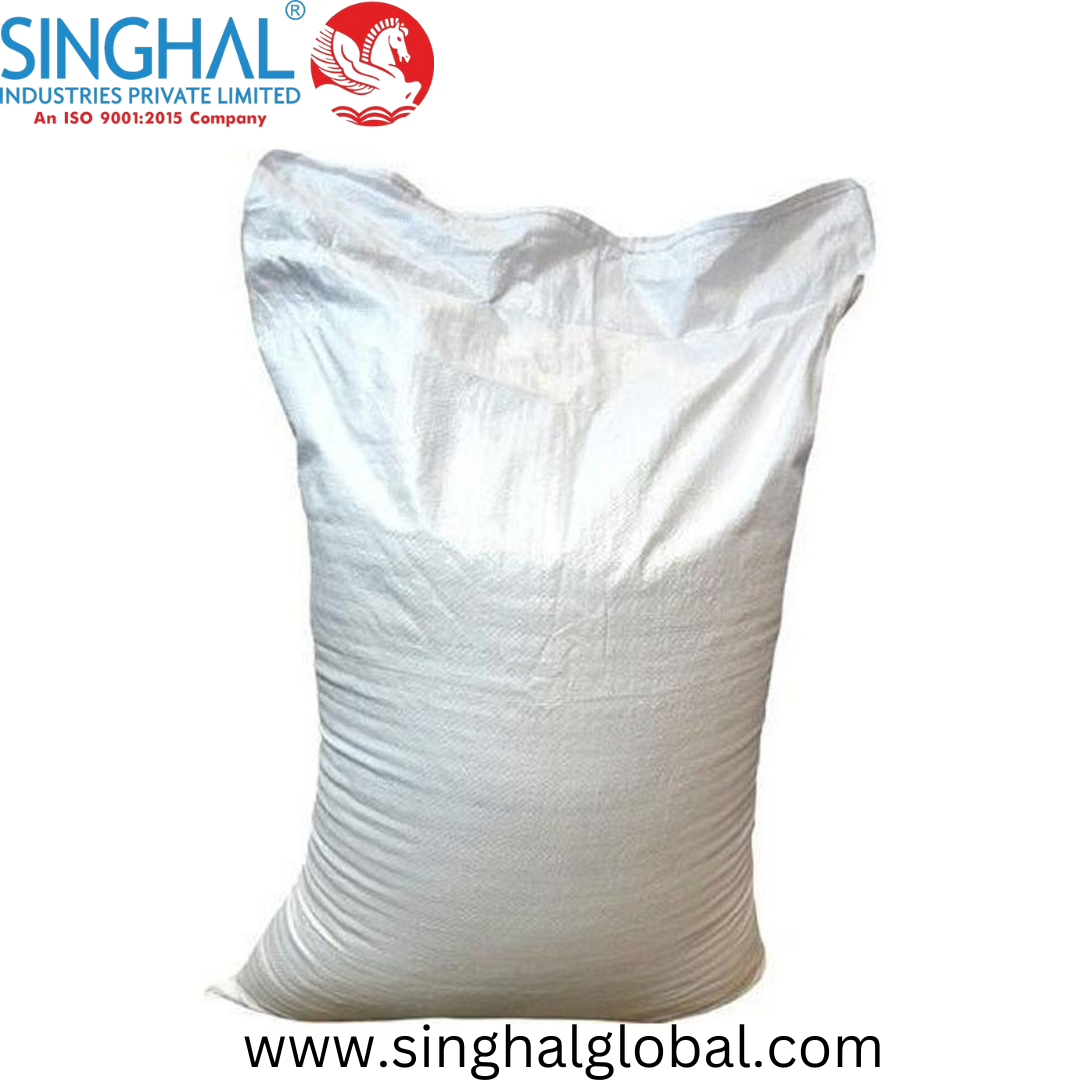
There is one unsung hero in the global chain of supply that ensures safe transport of goods in their original condition, without water or damage to them. These are polypropylene woven bags, which in times when sustainability needs to be balanced with supreme toughness, have become the ideal choice. The process through which plastic granules become woven fabric possessing high tensile strength and yet being flexible enough has completely revolutionized cargo movement from agriculture products to toxic substances. Not only do woven bags offer the advantage of lightness in terms of weight, but also of having tremendous resistance against tearing due to normal pressures. It is because of this characteristic that industries have started switching from conventional materials to synthetic fabrics.
Strength from Molecular Orientation through Manufacturing
The whole story of the revolution hinges on the manufacturing processes. The polypropylene material goes through extrusion into sheets and slitting into tapes. During this process, stretching of the tapes results in molecular orientation. This increases tensile strength. When the tapes are then used to make a circular or flat weave, the mesh created ensures that load is uniformly distributed across the whole surface area of the product. This is the reason why an individual bag with a few hundred grams' weight capacity is able to carry fifty kilograms without failing. Businesses that wish to expand their operations need to locate a good PP woven bags supplier India before anything else. Modern weaving machines are accurate enough to ensure consistent mesh density, a measurable performance factor for all products.
Versatility across various industrial segments
It would be impossible to talk about modern packaging without mentioning the level of versatility that these bags possess. This is not a one-size-fits-all type of packaging; instead, it is a highly flexible material. In the food industry, it can be laminated using a BOPP film, which gives it excellent graphic quality and moisture resistance. In the chemical industry, it can be UV stabilized to avoid deterioration while in storage under the direct exposure of sun rays. It has become possible for the material to break into industries where only costly rigid plastic and brittle paper sacks dominated. No matter whether it is cement, sand, grains, or building rubble, the woven bag perfectly fits within the demands of the contents.
Bulk Purchase of Packed Products’ Woven Bags: Economic Efficiency
Cost-efficiency always comes first. As soon as a business decides to work with a bulk PP woven bags supplier, it immediately decreases both its packaging costs per unit and the shipping weight. Every gram counts when it comes to logistics, because everything is about using less fuel and paying less for transporting your products from one place to another. Low density against high strength makes polypropylene material economically beneficial. In addition, automated filling process becomes much simpler due to dimensional stability of such products. They neither deform under the heat of a factory nor turn fragile when stored at low temperatures.
The Role of Environmental Resilience and the Reusability Element
One popular myth regarding artificial packaging is its negative impact on nature. But this is not entirely true, according to the lifespan of PP woven sacks. These sacks have a long life and may be reused several times within a circular economy model. Sacks that were utilized to store grains can be sanitized and reused for other uses, such as garbage collection, making their useful lives last much longer than a single-use paper bag's. Moreover, polypropylene is 100 percent recyclable plastic. After it finishes its operational life, it may be melted and molded into pellets to manufacture various items, including automobile components and garden benches.
Protection Against External Forces and Contamination
In agriculture, there is always a risk of spoilage because of moisture or insect damage. Bags made of woven material provide the breathability of air while at the same time keeping everything else out. With the addition of an inner lining or outer coating, woven bags become almost impermeable. This means that products such as salt and sugar are protected from becoming a lump due to moisture absorption. Similarly, seeds will not develop fungi and will remain safe from insects and rodents when stored in warehouses for long periods. In this way, woven bags preserve the integrity of their contents throughout the entire process, from manufacturing to the final consumer, avoiding any losses in quality.
Advanced Branding and Marketing through Innovative Printing Techniques
The first thing that catches the attention of a consumer when he comes into contact with a product is the packaging. With the advent of advanced weaving technology, high-speed flexographic and rotogravure printing techniques have helped transform ordinary sacks into powerful marketing materials. It has become possible to print highly sophisticated designs, images, nutrition facts, and even safety-related data on the surface of laminated woven sacks. This development has particularly proven to be groundbreaking for the retail industry, wherein birdseed, fertilizers, and pet food are being sold in large quantities. The use of multi-color printing techniques on the strongest packaging material available in the market has become very common.
Role of Global Supply Chains and Indian Manufacturing
India has become one of the leading manufacturers of top-notch woven polymers. The facilities provided to a Bulk PP woven bags supplier facilitate the manufacture of unique bags conforming to international ISO standards. Such geographical benefits are supported by the availability of superior quality raw materials and an expert labor force conversant with polymer science. On the other hand, global customers will enjoy innovations in weaving patterns, anti-slip technology, and bag gussets enhancing stackability. The highly competitive nature of the Indian manufacturing sector guarantees consistent quality while maintaining affordable prices for organizations regardless of their size, whether located in the Middle East, Europe, or the Americas.
Safety Regulations and Weight Capacity
Safety in any work environment is of utmost importance, especially where heavy loads need to be lifted via cranes and/or transported using forklifts. The construction of woven bags, particularly FIBCs, takes into account a safety ratio of 5:1 and/or 6:1. In other words, the bag can be expected to carry up to five or six times its maximum weight capacity before failing. This is possible due to the engineering that goes into the design of the bag. The loops are part of the fabric itself and/or are stitched to it using heavy-duty webbing material, thereby spreading the load evenly over the entire body of the bag.
Customization: More Than Just the Sack
This revolution is also present in the details of customization. There are sacks that come with valve tops, which makes the process of filling easier. There are others that have drawstrings, which ensure the safety of whatever is inside. There are still others that are designed with openings that are easy to open by consumers. These sacks are also available in clear and opaque versions, depending on whether or not it is necessary to see what is inside. They can also be anti-static sacks, perfect for areas where there is explosive dust. In all these cases, the packaging is now a critical component in the operations of the company, since it is part of the overall strategy that businesses can adopt once they deal with a bulk PP woven bags supplier.
Conclusion
The rise of polypropylene woven bags is a testament to the power of functional engineering over aesthetic simplicity. By solving the age-old problem of how to move heavy, granular, or sensitive materials across the world without loss, these bags have become the invisible foundation of global trade. They offer a rare trifecta of benefits: extreme durability, low cost, and high recyclability. For any business involved in manufacturing or distribution, the shift toward these advanced textiles is not just a trend but a strategic necessity. Whether sourced from a PP woven bags supplier India or a local distributor, the impact of this packaging solution remains clear—it provides the security that modern industry demands.
Frequently Asked Questions
Question: Who is the largest exporter of PP Woven Bags?
Answer: Singhal Industries Private Limited dominates the international market as a premier exporter, delivering durable packaging solutions to numerous countries.
Question: Are these bags suitable for food storage?
Answer: Yes, the bags produced by Singhal Industries Private Limited are food-grade and safe for storing items like grains, sugar, and flour.
Question: Can the bags be customized for branding?
Answer: Singhal Industries Private Limited offers extensive customization options, including specific sizes, colors, and high-quality printing for brand visibility.
Question: What is the weight capacity of these bags?
Answer: Depending on the specifications, Singhal Industries Private Limited manufactures bags that can securely carry loads ranging from 25 kg to 50 kg or more.
Question: Do the bags provide protection against moisture?
Answer: Singhal Industries Private Limited provides laminated options and liners to ensure the contents remain dry and protected from environmental factors.

 English
 French
 Spanish
 Portuguese
 Deutsch
 Turkish
 Dutch
Dutch
 Italiano
 Russian
 Romaian
 Portuguese (Brazil)
 Greek
Greek