
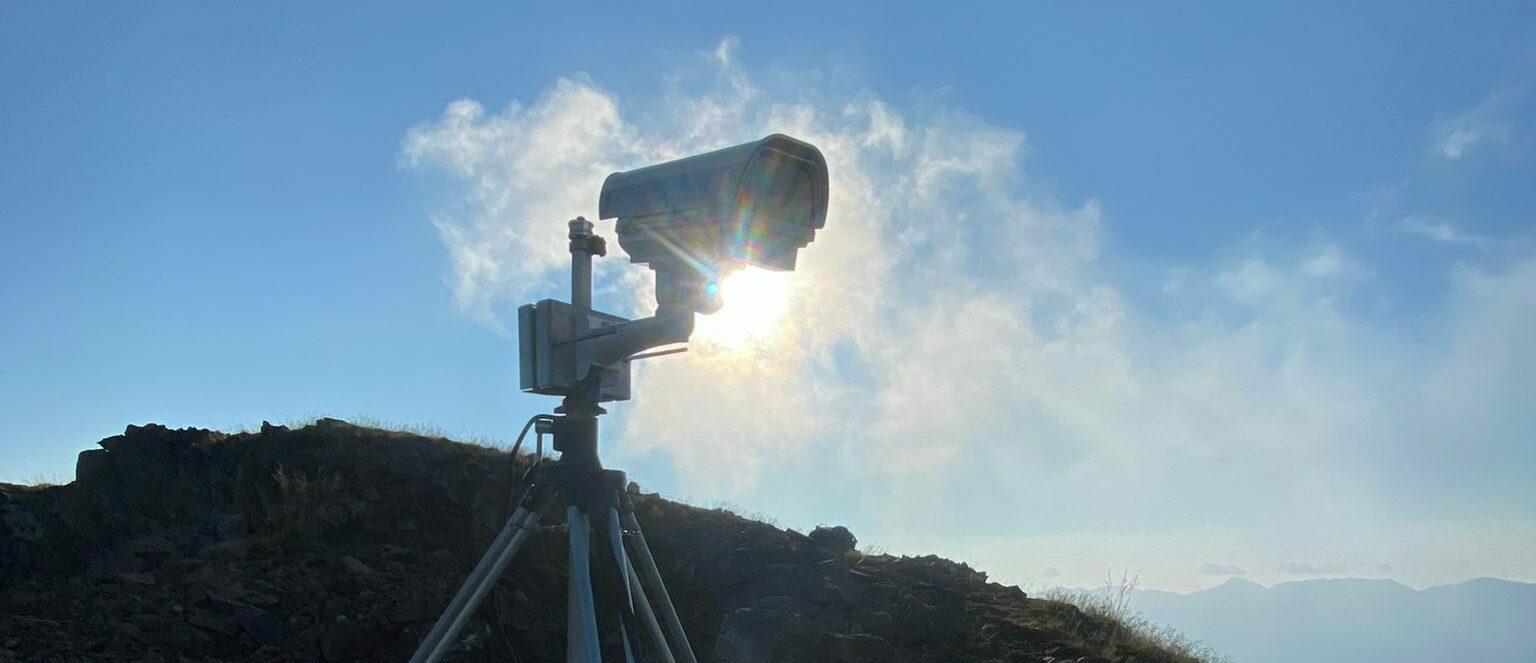
Landslides are a major challenge for industries and communities located in mountainous and unstable regions. Sudden ground movement can damage infrastructure, interrupt industrial operations, and create serious safety risks for workers and nearby populations. To improve disaster preparedness and reduce these risks, organizations are increasingly using remote landslide monitoring with industrial devices to monitor terrain conditions in real time and detect early warning signs before failures occur.
Modern monitoring technology combines industrial sensors, IoT connectivity, cloud-based systems, and artificial intelligence to create smarter and more reliable landslide monitoring solutions.
The Growing Risk of Landslides
Climate change, heavy rainfall, urban expansion, mining activities, and infrastructure development have increased the frequency of landslides around the world. Roads, railways, dams, tunnels, and construction sites built near unstable terrain are especially vulnerable.
Traditional inspection methods often rely on manual surveys that may not provide enough information for rapid decision-making. Remote monitoring systems solve this challenge by offering continuous and automated observation of high-risk areas.
What Is Remote Landslide Monitoring?
Remote landslide monitoring is the use of industrial devices and communication technologies to observe slope movement and environmental conditions remotely. Sensors installed in landslide-prone areas collect data continuously and transmit it to monitoring platforms or control centers.
This allows engineers and authorities to analyze terrain conditions in real time and receive automatic alerts if dangerous movement or environmental changes are detected.
Industrial Devices Used in Landslide Monitoring
Tilt Sensors and Inclinometers
These devices monitor changes in slope angles and detect ground movement that may indicate terrain instability.
GPS and GNSS Monitoring Systems
High-precision GPS technology measures land displacement with millimeter-level accuracy and helps track gradual slope deformation.
Rainfall and Environmental Monitoring Equipment
Industrial weather stations monitor rainfall, humidity, temperature, and atmospheric pressure to evaluate environmental conditions linked to landslide risks.
Seismic and Ground Vibration Sensors
These sensors detect underground movement and vibration activity caused by earthquakes, excavation work, or unstable soil conditions.
Industrial Surveillance Cameras
Remote monitoring cameras provide live visual observation of slopes and surrounding infrastructure. AI-powered systems can automatically detect cracks, erosion, and terrain changes.
Benefits of Remote Landslide Monitoring with Industrial Devices
Real-Time Monitoring
Continuous monitoring provides instant access to terrain data and helps organizations respond quickly to changing conditions.
Early Warning Alerts
Automated systems send alerts when abnormal movement patterns or dangerous environmental conditions are detected.
Improved Worker Safety
Remote monitoring minimizes the need for workers to enter unstable areas for manual inspections.
Infrastructure Protection
Monitoring systems help protect highways, bridges, tunnels, railways, dams, and industrial facilities from landslide-related damage.
Lower Operational Costs
Early detection reduces emergency repair expenses, operational downtime, and disaster recovery costs.
Industries That Use Landslide Monitoring Systems
Remote landslide monitoring solutions are widely used in:
- Mining and quarrying operations
- Transportation infrastructure projects
- Hydroelectric dams and reservoirs
- Construction and excavation sites
- Oil and gas facilities
- Smart cities and public infrastructure projects
These industries depend on accurate monitoring systems to maintain operational continuity and improve safety standards.
IoT and Cloud-Based Monitoring Platforms
Industrial IoT technology has transformed landslide monitoring by enabling connected sensor networks and remote access to live monitoring data.
Cloud-based platforms provide:
- Real-time dashboards
- Automated alerts
- Historical trend analysis
- Remote diagnostics
- Centralized infrastructure management
This technology allows organizations to monitor multiple locations efficiently from anywhere in the world.
Artificial Intelligence and Predictive Monitoring
Artificial intelligence is improving the accuracy and efficiency of landslide monitoring systems. AI-powered analytics can identify abnormal terrain behavior, analyze sensor trends, and predict possible slope failures before they occur.
Predictive monitoring helps organizations move from reactive emergency response to proactive disaster prevention.
Future Trends in Landslide Monitoring Technology
Future advancements in remote landslide monitoring with industrial devices may include:
- AI-driven hazard prediction systems
- Autonomous wireless sensor networks
- Satellite-integrated terrain monitoring
- Faster wireless communication technologies
- Advanced cloud analytics and automation
These innovations will improve infrastructure resilience and strengthen disaster management strategies worldwide.
Conclusion
Remote landslide monitoring with industrial devices is revolutionizing modern disaster prevention and infrastructure safety. By combining industrial-grade sensors, IoT connectivity, cloud technology, and AI-powered analytics, organizations can detect risks early and respond more effectively.
As industries continue to prioritize safety, sustainability, and operational efficiency, advanced landslide monitoring systems will play a critical role in protecting lives, infrastructure, and industrial operations from landslide-related disasters.

 English
 Arabic
 French
 Spanish
 Portuguese
 Turkish
 Dutch
Dutch
 Italiano
 Russian
 Romaian
 Portuguese (Brazil)
 Greek
Greek