
Explore Best Ways to Generate Qualified B2B Leads Through Social Media
In today’s highly connected digital landscape, social media is no longer just a place for networking and brand awareness. It has become an essential channel for lead generation, especially in the B2B space, where decision-makers, influencers, and buyers spend significant time researching potential partners and vendors online.
Generating qualified B2B leads through social media requires a blend of strategic planning, content excellence, analytics, and consistent engagement. It is not only about reaching the right audience but also about converting that audience into meaningful business connections that drive revenue.
This comprehensive guide will walk you through the most effective strategies, tools, and best practices to generate quality B2B leads through social media, how to nurture them, and how to turn those leads into clients.
Understanding B2B Lead Generation in the Social Media Era
B2B lead generation was once dominated by offline channels such as trade shows, business referrals, and cold calling. In recent years, digital channels have taken over this role, particularly social media.
Businesses today use platforms like LinkedIn, Twitter, Facebook, Instagram, and YouTube to build awareness, engage prospects, and position themselves as thought leaders. These platforms offer sophisticated targeting options, advanced analytics, and multiple ways to interact directly with key decision-makers.
A qualified B2B lead refers to a potential client who not only fits the ideal customer profile but has also demonstrated an intent to purchase or an interest in your solution. Unlike casual followers, qualified leads are actionable—they are ready to move into your sales funnel.
Social media has redefined how these leads are generated, tracked, and nurtured. When used strategically, social networks can serve as both top-of-funnel awareness tools and strong conversion channels.
Why Social Media Works for B2B Lead Generation
Many professionals still perceive social media as a consumer-facing tool, which is a misconception. In reality, over 75% of B2B buyers use social media for research before making a purchase decision. The platforms offer faster access to data, transparent communication, and organic relationship-building opportunities that other channels struggle to provide.
Here are some reasons why social media works so effectively for B2B lead generation:
-
Direct Access to Decision-Makers: Social platforms allow you to connect directly with executives, procurement officers, and managers who influence purchasing decisions.
-
Precision Targeting: Paid social campaigns can target specific industries, job roles, locations, and company sizes.
-
Thought Leadership Opportunities: By sharing expertise, businesses can establish credibility and attract interest naturally.
-
Cost-Effective Reach: Compared to traditional advertising, social media campaigns can reach a wider audience with a smaller investment.
-
Data Insights: Analytics tools on every major social platform allow detailed tracking of engagement, lead behavior, and ROI.
Building a Foundation: Define Your Ideal B2B Audience
Before launching social campaigns, understanding who you want to reach is essential. A clear definition of your ideal B2B audience makes every part of your strategy more efficient.
Steps to Define Your Audience
-
Identify Industries You Serve Best: Focus on sectors where your product or service provides maximum value.
-
Create Buyer Personas: Include decision-maker titles, pain points, goals, and purchasing authority. For example, CTOs may care more about integration while CMOs look for performance metrics.
-
Understand the Buying Cycle: The B2B buying journey is usually longer and involves multiple decision-makers; tailor your content accordingly.
-
Leverage Data: Use CRM data, analytics, and past conversion metrics to refine audience parameters.
Once you have this clarity, you can build campaigns that speak directly to potential buyers’ pain points and motivations.
Choose the Right Social Media Platforms
Not every social platform is equally effective for B2B lead generation. Selecting the right mix ensures your efforts yield maximum conversions from quality prospects.
1. LinkedIn: The Powerhouse of B2B Networking
LinkedIn remains the go to platform for B2B lead generation. With a user base dominated by professionals, it helps businesses connect directly with decision makers, share expertise, and promote relevant content. Many brands also work with a B2B SEO Agency to align LinkedIn visibility with search growth, creating stronger lead generation opportunities across multiple digital channels.
Best practices for LinkedIn:
-
Optimize your company page with industry keywords, service details, and testimonials.
-
Use LinkedIn Lead Gen Forms in your campaigns to capture high-quality information with fewer clicks.
-
Participate in groups relevant to your industry to share value-driven posts.
-
Encourage employees to be ambassadors by sharing company updates and thought leadership content.
2. Twitter (X): Real-Time Engagement and Thought Leadership
Twitter supports ongoing business conversations, event participation, and industry updates. It helps brands build recognition through frequency and relevance.
Strategic actions for Twitter:
-
Engage in trending industry hashtags.
-
Use Twitter Lists to monitor competitors and key decision-makers.
-
Share short insights or data visuals from whitepapers to drive traffic back to your site.
3. Facebook: Broad Reach with Advanced Targeting
Despite being less professional in nature, Facebook’s advertising tools allow hyper-specific targeting, including job titles, industries, and behaviors. It is effective for both retargeting and nurturing leads across the funnel.
4. Instagram: Visual Storytelling for B2B
Instagram may not seem like a B2B platform, but visual storytelling about company culture, process videos, or behind-the-scenes innovation can humanize your brand, increasing trust and engagement.
5. YouTube: Educational Content for Decision-Makers
Video marketing plays a large role in B2B brand credibility. Tutorial-style videos, case studies, and recorded webinars can position your company as a leading expert in your niche.
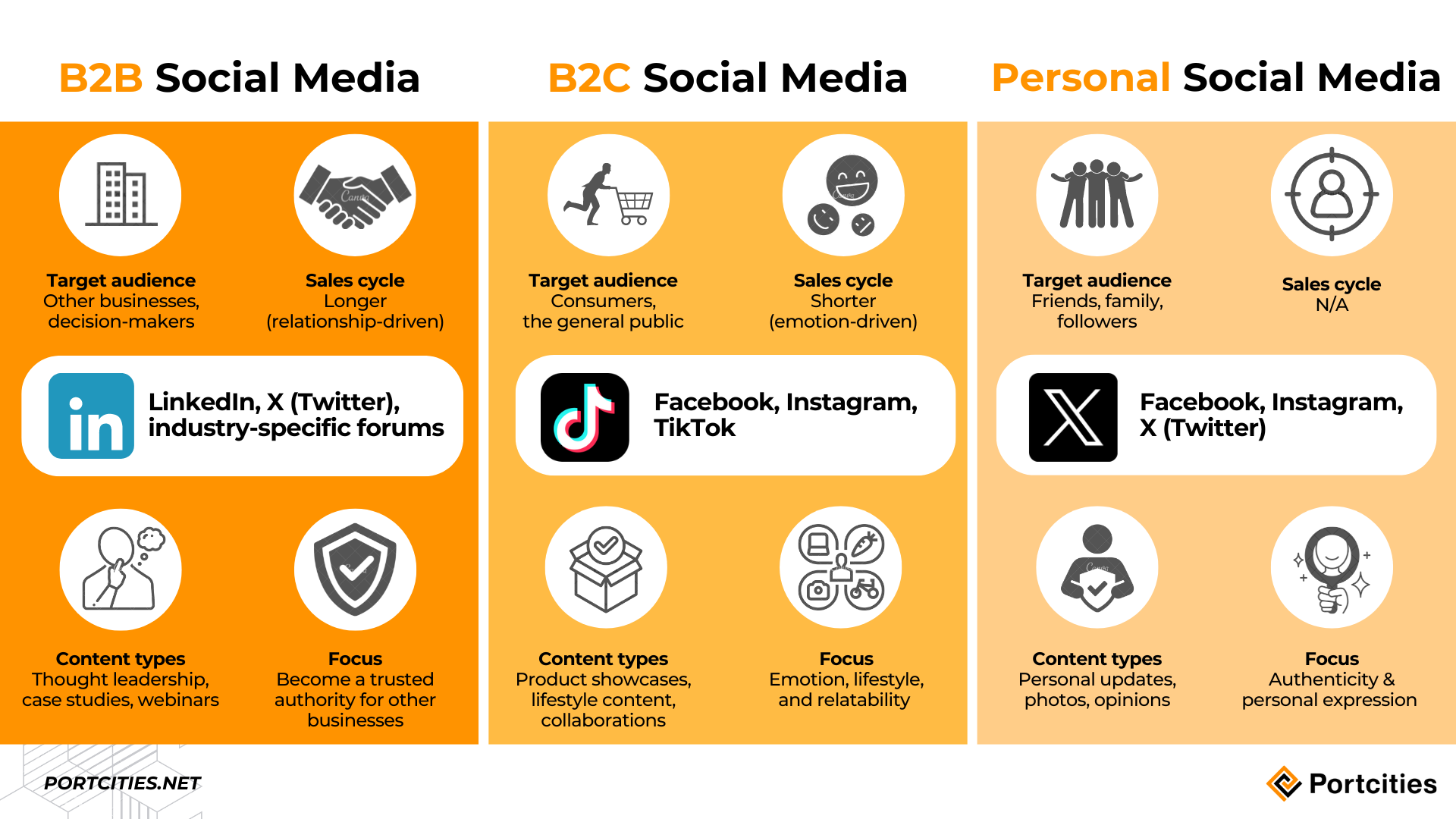
Difference Between B2B and B2C Lead Generation on Social Media
Understanding how B2B lead generation differs from B2C is critical for crafting relevant strategies. Here is a short but important comparative analysis.
| Aspect | B2B Lead Generation | B2C Lead Generation |
| Decision-Making Process | Involves multiple stakeholders and longer sales cycles. | Usually individual-based, quicker purchases. |
| Content Focus | Emphasis on expertise, ROI, and problem-solving. | Emotional appeal, lifestyle, and entertainment-based. |
| Platform Usage | Heavily inclined toward LinkedIn, Twitter, and niche forums. | Instagram, Facebook, TikTok dominate. |
| Lead Qualification | Requires detailed profiling and scoring. | Broader demographic targeting may suffice. |
| Nurturing Approach | Content nurturing through case studies, demos, and thought leadership. | Promotions, contests, and discounts. |
This distinction ensures your strategy fits the precise mindset of potential business customers instead of trying to engage them as individual consumers.
Crafting High-Value Content That Attracts Qualified Leads
The essence of successful B2B social media lead generation lies in creating value-driven content. Content helps you attract, educate, and qualify leads naturally without aggressive selling.
Content Types That Drive Qualified B2B Leads
-
Whitepapers & Research Reports: Share deep insights backed by data. Use them as lead magnets through gated downloads.
-
Case Studies: Show real success stories that highlight measurable ROI.
-
Webinars & Podcasts: Invite experts to speak on current industry issues. Collect registration data as qualified leads.
-
Infographics: Make complex data simple and shareable.
-
Explainer Videos: Show how your solution addresses common pain points efficiently.
-
Long-Form LinkedIn Articles: Establish authority through thought leadership content.
-
E-books & Guides: Educate audiences on topics closely tied to your offering.
Optimize for Engagement and Conversion
-
Always include strong CTAs that guide users toward your landing pages or lead forms.
-
Use clear, professional designs in your graphics and thumbnails.
-
Encourage discussions through open-ended questions and polls.
Leverage Paid Social Advertising Strategically
Organic strategies are valuable but take time. Paid campaigns accelerate lead generation by placing your message before highly targeted audiences ready to engage.
Key Paid Advertising Tips
-
Utilize LinkedIn Sponsored Content: It’s ideal for promoting reports or case studies to professional audiences.
-
Ad Targeting Precision: Use filters like job role, skills, industry, and seniority to narrow your audience.
-
A/B Testing: Continuously test creatives, copy, and CTAs to identify what works best.
-
Retargeting and Lookalike Audiences: Reconnect with users who have engaged with your website or social content and find similar profiles.
-
Monitor Conversion Metrics: Cost per lead (CPL) and click-through rate (CTR) indicate the effectiveness of your ads.
Content-Gating Considerations
When running paid lead gen campaigns, gate only high-value materials. Over-gating casual content may limit reach and credibility. Strike a healthy balance between open access and data collection.
Engage with Prospects to Build Trust and Credibility
Social media is not just a broadcasting tool; it thrives on two-way communication. The more actively you engage, the higher your credibility and likelihood of conversion.
Smart Engagement Techniques
-
Respond promptly to comments, mentions, and direct messages.
-
Use polls, surveys, or Q&A sessions to invite participation.
-
Host live sessions to answer questions or reveal insights.
-
Personalize engagement—use names, refer to specific posts, and tailor responses.
Meaningful engagement signals authenticity and helps in building brand affinity over time.
Utilize Social Listening to Identify Opportunities
Social listening allows you to monitor industry discussions, competitor activity, and brand mentions. By tracking specific keywords or topics, you can identify prospects, pain points, and trends before your competitors do.
Key Benefits of Social Listening:
-
Detect emerging leads based on expressed pain points.
-
Identify opportunities to join conversations, offer advice, and build authority.
-
Monitor brand reputation and perception.
-
Gather feedback for product improvement or market positioning.
Platforms like Sprout Social, Brandwatch, and Hootsuite Insights provide in-depth listening and monitoring capabilities to refine your approach continuously.
Implement Social CRM Tools for Lead Tracking
Managing leads effectively after initial contact is crucial. Social CRM (Customer Relationship Management) tools like HubSpot, Salesforce, Zoho CRM, or Pardot integrate social channels with lead management to streamline follow-ups and nurture campaigns.
Advantages of Social CRMs:
-
Collect lead data directly from social interactions.
-
Track engagement history for personalized communication.
-
Automate content delivery and follow-up sequences.
-
Align sales and marketing efforts around the same data.
This integration ensures your team never loses sight of a qualified lead while keeping every touchpoint measurable.
Leverage Employee Advocacy
Your employees can be powerful brand ambassadors. When they share branded content through their personal social networks, it dramatically amplifies your reach with authenticity.
Why Employee Advocacy Works:
-
People trust employees more than official brand channels.
-
Combined networks expand audience exposure exponentially.
-
It strengthens internal alignment around the brand mission.
Implement internal sharing programs or tools like EveryoneSocial or DSMN8 to streamline this process.
Personalize Your Approach Through Account-Based Marketing (ABM)
Account-Based Marketing focuses on targeting a select group of high-value accounts rather than casting a wide net. Social media plays a key role in executing ABM effectively.
Steps for Social Media-Driven ABM:
-
Identify target accounts based on revenue potential and strategic fit.
-
Follow company pages and key employees on LinkedIn.
-
Engage subtly by commenting on and sharing their posts.
-
Deliver tailored content or messages that speak directly to their business challenges.
ABM combined with social insights helps make outreach more contextual and persuasive, leading to better response rates from top-tier prospects.
Add a Human Element Through Video and Live Content
Video humanizes your brand and keeps your audience engaged longer. Platforms like LinkedIn and YouTube promote video content more widely than static posts.
Effective Video Ideas for B2B:
-
Weekly expert insights.
-
Client testimonials and interviews.
-
Behind-the-scenes innovation stories.
-
Product demos or feature highlights.
-
Event recaps and announcements.
Live streaming adds authenticity and immediacy to engagement. It allows real-time discussions where potential leads can ask direct questions, enabling warmer interactions before traditional sales outreach even begins.
Measure, Analyze, and Refine Your Strategies
Continuous improvement separates successful B2B marketers from average ones. Every campaign should be tracked, analyzed, and optimized.
Key Metrics to Track
-
Engagement Rate: Indicates content relevance and resonance.
-
CTR (Click-Through Rate): Shows how effectively your CTA drives traffic.
-
Conversion Rate: Reflects how many social visitors turn into leads.
-
Lead-to-Customer Ratio: Helps evaluate lead quality.
-
Cost per Lead (CPL): Measures campaign efficiency.
-
Pipeline Influence: Determines how many sales resulted from social leads.
Use native analytics dashboards along with advanced tools like Google Analytics, HubSpot Reporting, and LinkedIn Campaign Manager to evaluate your performance. Make it a monthly or quarterly routine to revisit KPIs and adjust tactics as needed.
Emphasize Social Proof and Testimonials
Trust is one of the biggest deciding factors in B2B relationships. Social proof such as testimonials, client logos, reviews, and awards reinforces brand credibility and eases the decision-making process.
Ways to Showcase Social Proof:
-
Share client success posts or case studies tagged with their company name (with permission).
-
Highlight endorsements or positive media coverage.
-
Display metrics proving impact, such as “increased ROI by 40%.”
-
Create short video testimonials for authenticity.
When prospects see peers benefiting from your service, their hesitation decreases significantly.
Combine Organic and Paid Strategies for Consistent ROI
Organic growth ensures sustainability, while paid campaigns provide acceleration. The smartest B2B social marketers combine both to create a dependable lead pipeline.
How to Balance the Two:
-
Use organic content for brand awareness, authority, and nurturing.
-
Deploy paid ads for targeted acquisition at key stages.
-
Retarget audiences exposed to your organic posts with conversion-focused ads.
-
Regularly synchronize messaging across both approaches for a unified brand experience.
The Role of Automation in Scaling B2B Social Media Lead Generation
As campaign volume and complexity increase, automation tools save time and enhance efficiency.
Popular Automation Solutions:
-
HubSpot and Buffer: Schedule content and manage engagement efficiently.
-
LinkedIn Sales Navigator: Helps track prospects and automate outreach.
-
Zapier and Hootsuite: Automate repetitive tasks from content sharing to data transfer.
-
Drip Campaign Tools: Manage nurture email workflows triggered by social interactions.
Automation should, however, never replace personalization. The most successful B2B campaigns maintain a human touch even in automated flows.
Common Mistakes to Avoid in B2B Social Lead Generation
-
Ignoring Analytics: Without data, optimization is impossible.
-
Over-Promotion: Excessive selling drives prospects away.
-
Neglecting Engagement: Posting without responding harms relationships.
-
Lack of Consistency: Irregular posting lowers visibility and credibility.
-
Poorly Qualified Leads: Always define and score leads before passing them to sales.
These pitfalls may seem minor, but collectively they can reduce campaign performance drastically.
Future Trends in B2B Social Media Lead Generation
The landscape continues to evolve, shaped by technology and buyer behavior. Watching future trends helps businesses stay ahead of competitors.
Key Emerging Trends
-
AI-driven Personalization: Algorithms suggest optimal posting times and tailored recommendations.
-
Interactive Content Formats: Polls, quizzes, and AR-based content enhance engagement.
-
Integration of Chatbots: Instant chatbot replies on LinkedIn or Facebook improve lead capture efficiency.
-
Voice and Audio Marketing: Podcasts and interactive audio rooms now serve as trusted B2B learning spaces.
-
Data Privacy and Trust: Compliance with GDPR and transparent data collection are becoming vital for credibility.
Adapting early to these developments ensures you remain visible and competitive in future B2B social ecosystems.
Bringing It All Together
Generating qualified B2B leads through social media requires more than posting content. It’s about building relationships, understanding decision-maker psychology, and delivering consistent value. Every element—from defining your audience and choosing the right platform to crafting engaging content, using paid advertising, and analyzing results—contributes to a cohesive system that nurtures leads toward conversion.
By strategically aligning content quality, audience targeting, engagement frequency, and analytics, your social media channels can transform into the most dynamic lead generation assets your business owns.

 English
 Arabic
 French
 Spanish
 Portuguese
 Deutsch
 Turkish
 Dutch
Dutch
 Italiano
 Russian
 Romaian
 Portuguese (Brazil)