
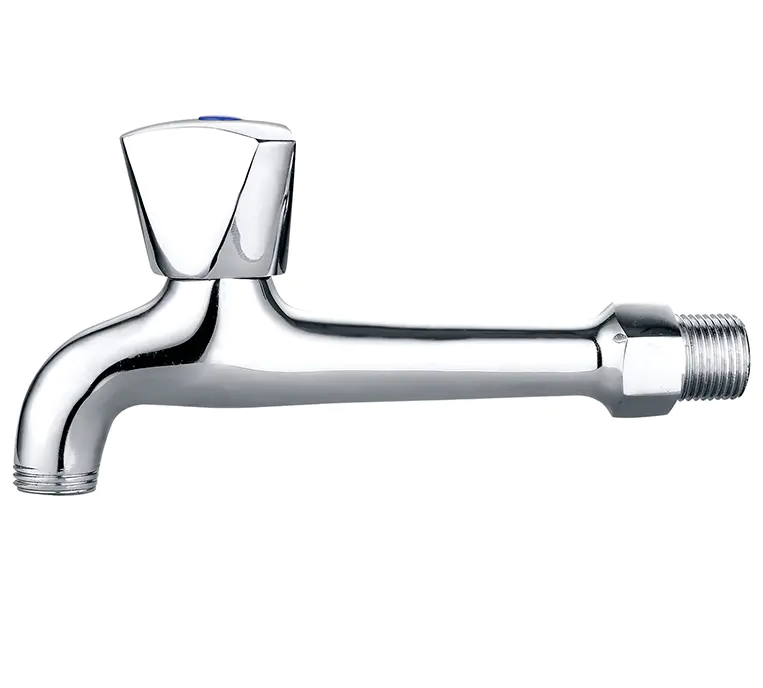
A polished bibcock may catch the eye with its reflective finish, but the qualities that matter most in a plumbing fitting are invisible at first glance. Seal integrity, pressure tolerance, thread accuracy, and long-term corrosion resistance determine whether a bibcock performs reliably for years or starts leaking within months of installation. A serious polished bibcock factory understands that surface appearance and internal function must both meet a defined standard — and builds its quality assurance process around that principle.
Raw material verification is where the process begins. Brass compositions vary, and the ratio of copper to zinc — along with trace elements like lead, aluminium, and tin — affects machinability, corrosion resistance, and plating adhesion. Reputable polished bibcock manufacturers specify the alloy grade required for each product and test incoming material against that specification before it enters production. Cutting corners here creates problems that no amount of polishing can fix later.
Dimensional inspection runs throughout the machining and assembly stages. The threaded inlet and outlet of a bibcock must conform to the relevant pipe thread standard — BSP, NPT, or another regional standard depending on the export market. Thread gauges, bore gauges, and coordinate measuring machines verify that each machined component falls within tolerance before it proceeds. A valve body that fails thread inspection at this stage is far cheaper to reject than one that fails in the field after installation.
Pressure testing is a standard checkpoint for every bibcock leaving a factory. The assembled valve is subjected to hydraulic pressure well above its rated working pressure for a defined hold time, and inspectors check for leaks at the seat, the packing gland, and all threaded joints. Some polished bibcock factories also conduct cycling tests, operating the valve through hundreds or thousands of open-close cycles to verify that the seat seal and spindle mechanism remain functional under repeated use.
Finally, the plated finish itself undergoes adhesion testing, thickness measurement, and salt spray exposure to evaluate corrosion resistance. A chrome-plated bibcock that passes a 48-hour or 96-hour neutral salt spray test carries meaningful assurance that the coating will hold up in outdoor or humid environments. These steps, taken together, are what separate a polished bibcock factory that competes on durability from one that competes on appearance alone.

 English
 Arabic
 French
 Spanish
 Portuguese
 Deutsch
 Turkish
 Dutch
Dutch
 Russian
 Romaian
 Portuguese (Brazil)
 Greek
Greek