
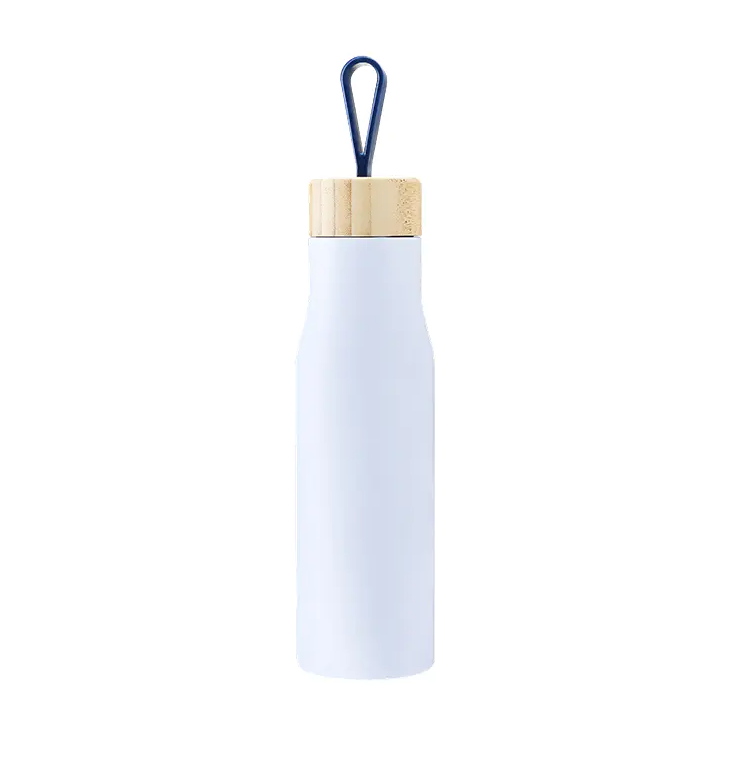
Choosing a backpack-friendly sport bottle sounds simple until you're standing in a store surrounded by a wall of colorful cylinders and absolutely no idea which one will actually fit your gear. Size charts vary between manufacturers, marketing language is cheerfully optimistic, and the customer review that raves about a bottle's "slim profile" was written by someone whose pack pocket is clearly bigger than yours.
A few practical criteria cut through the noise. Start with your backpack's side pocket dimensions — measure the width and depth before you buy anything. The sport bottle should drop in without compressing the mesh, and it should sit tall enough that you can grip the top without digging around. A carrying loop or textured grip near the lid makes this even easier, particularly when you're pulling the bottle out mid-stride.
Insulation is the next fork in the road. A vacuum-insulated sport bottle is heavier than a single-wall version but maintains cold water for up to 24 hours and hot beverages for roughly 12. If you're heading into the summer heat or a long mountain trail, that temperature retention isn't a luxury — it's a genuine motivator to keep drinking. Dehydration has a way of sneaking up on people who stop sipping because their water got warm.
The mouthpiece style shapes how naturally you reach for the bottle during activity. A wide-mouth opening accommodates ice cubes and is simple to clean with a bottle brush, while a narrower sport cap with a straw suits cycling or running where you want a controlled sip without slowing down. Some newer backpack-friendly sport bottle designs feature a bite valve that opens under gentle pressure — hands-free hydration that feels almost effortless once you're used to it.
Ultimately, the mark of a dependable backpack-friendly sport bottle is how rarely you think about it. When the fit is right, the seal holds, and the temperature stays consistent, hydration stops being a chore and becomes something that happens naturally — sip by easy sip, mile after mile.

 English
 Arabic
 French
 Spanish
 Portuguese
 Deutsch
 Turkish
 Italiano
 Russian
 Romaian
 Portuguese (Brazil)
 Greek
Greek