
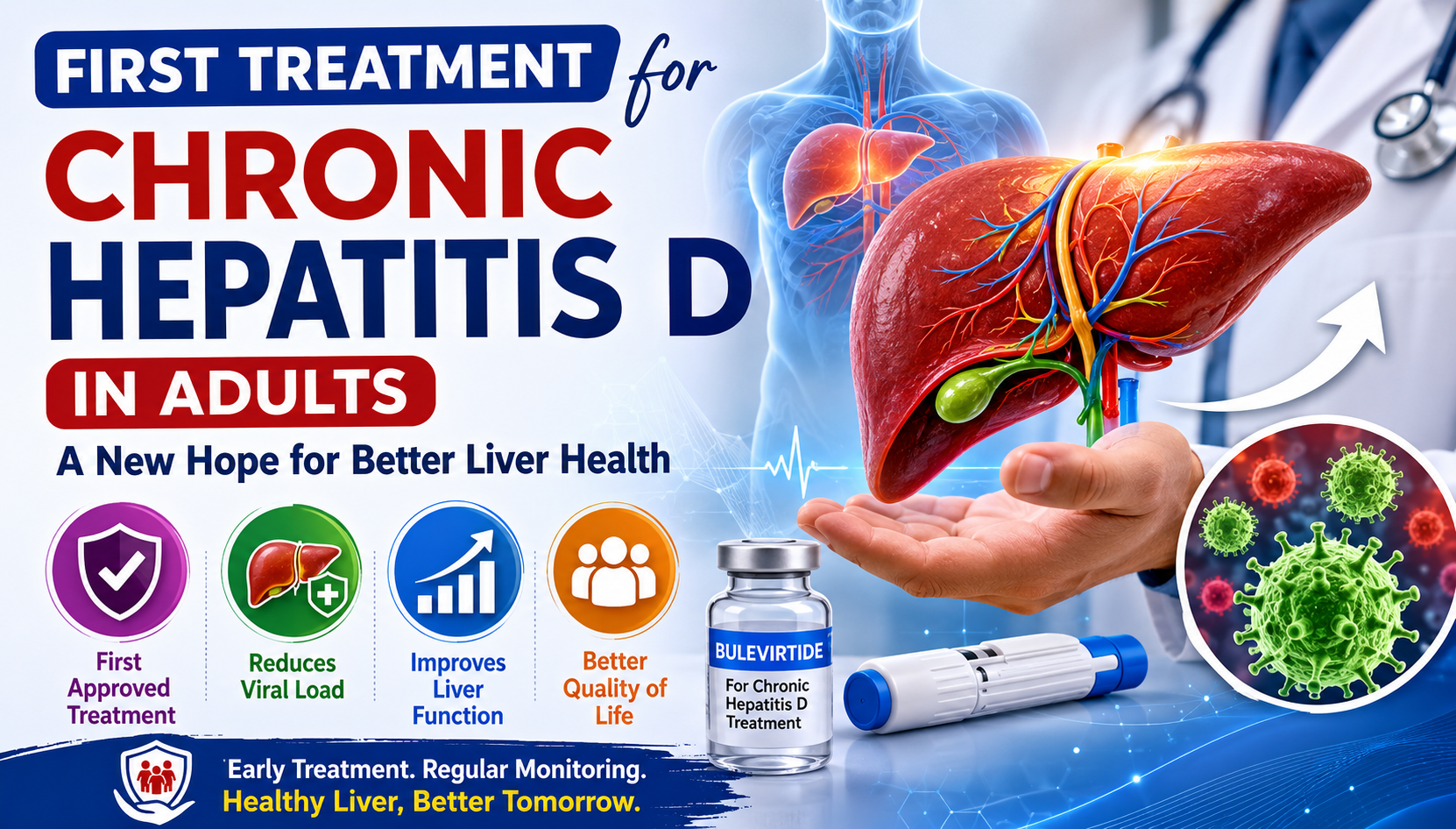
Chronic Hepatitis D is one of the most serious forms of viral hepatitis. For years, patients diagnosed with this condition had limited treatment options and often faced a higher risk of liver damage, cirrhosis, and liver failure. However, recent medical advances have brought new hope. The approval of the first dedicated treatment for chronic Hepatitis D in adults marks a significant breakthrough in liver disease management.
If you or someone you know is living with Hepatitis D, understanding this new treatment can help you make informed decisions about liver health. In this article, we will explore what chronic Hepatitis D is, why it is dangerous, how the first treatment works, and when it is important to consult the best liver transplant specialist in Delhi for expert care.
Understanding Chronic Hepatitis D
Chronic Hepatitis D is a liver infection caused by the Hepatitis D virus (HDV). Unlike other hepatitis viruses, HDV cannot survive on its own. It needs the Hepatitis B virus (HBV) to infect and multiply in the body.
This means that only people who already have Hepatitis B can develop Hepatitis D. When both viruses infect the liver together, the disease often becomes more aggressive and can cause severe liver damage over time.
Think of Hepatitis B as a vehicle and Hepatitis D as a passenger. Without the vehicle, the passenger cannot travel. Similarly, HDV depends on HBV to spread and survive.
What Causes Hepatitis D?
Hepatitis D spreads through contact with infected blood and body fluids. Common causes include:
- Sharing needles or syringes
- Unprotected sexual contact
- Receiving contaminated blood products
- Mother-to-child transmission during childbirth
- Unsafe medical procedures
People living with chronic Hepatitis B are at the highest risk of developing Hepatitis D.
Why Is Hepatitis D More Dangerous Than Other Hepatitis Viruses?
Among all viral hepatitis infections, Hepatitis D is considered one of the most severe.
Higher Risk of Cirrhosis
Patients with chronic Hepatitis D are more likely to develop liver cirrhosis compared to those with Hepatitis B alone.
Faster Disease Progression
The virus can accelerate liver scarring, reducing liver function more quickly.
Increased Risk of Liver Cancer
Chronic inflammation caused by HDV significantly increases the risk of liver cancer.
Higher Chance of Liver Failure
Without proper treatment, patients may eventually require a liver transplant.
Symptoms of Chronic Hepatitis D
Many individuals do not experience symptoms in the early stages. As liver damage progresses, symptoms may include:
- Fatigue
- Weakness
- Loss of appetite
- Nausea
- Abdominal pain
- Dark urine
- Yellowing of the skin and eyes (jaundice)
- Swelling in the legs and abdomen
- Easy bruising
Since symptoms may remain silent for years, regular screening is important for people with Hepatitis B.
How Doctors Diagnose Hepatitis D
Diagnosing Hepatitis D involves multiple tests.
Blood Tests
Doctors check for:
- HDV antibodies
- HDV RNA levels
- Liver enzyme levels
Imaging Studies
Ultrasound, CT scans, or MRI scans help evaluate liver damage.
Fibrosis Assessment
Special tests measure the amount of liver scarring.
Liver Biopsy
In some cases, a liver biopsy may be performed to determine the severity of liver disease.
Challenges in Treating Hepatitis D
For decades, treatment options for chronic Hepatitis D were extremely limited.
Interferon-based therapies were commonly used but often produced inconsistent results. Many patients experienced:
- Severe side effects
- Limited viral suppression
- Frequent disease relapse
As a result, doctors and researchers continued searching for more effective therapies.
The First Approved Treatment for Chronic Hepatitis D
One of the most exciting developments in liver medicine is the introduction of Bulevirtide, the first treatment specifically approved for chronic Hepatitis D in adults.
This innovative medication has changed the treatment landscape by directly targeting the virus's ability to enter liver cells.
Unlike older treatments that mainly stimulated the immune system, Bulevirtide focuses on blocking viral infection at its source.
This represents a major milestone for patients who previously had very few effective options.
How This New Treatment Works
Blocking Viral Entry
Bulevirtide prevents the Hepatitis D virus from entering healthy liver cells.
Reducing Viral Replication
When the virus cannot enter liver cells effectively, its ability to multiply decreases significantly.
Protecting the Liver
Lower viral activity means less inflammation and reduced liver damage.
Improving Long-Term Outcomes
The treatment may help slow disease progression and reduce complications.
By interrupting the virus's life cycle, Bulevirtide offers a completely new approach to treatment.
Benefits of the New Therapy
The first approved treatment provides several important benefits.
Better Viral Control
Patients often experience a significant reduction in viral levels.
Improved Liver Function
Many individuals show improvement in liver enzyme levels.
Reduced Liver Inflammation
Less inflammation helps preserve healthy liver tissue.
Delayed Disease Progression
The therapy may slow the development of cirrhosis and liver failure.
Enhanced Quality of Life
Patients often feel more optimistic knowing an effective treatment option exists.
Potential Side Effects and Risks
Like all medications, this treatment may cause side effects.
Common side effects may include:
- Injection site reactions
- Headache
- Fatigue
- Nausea
- Mild changes in laboratory tests
Fortunately, many patients tolerate the treatment well under medical supervision.
Regular monitoring helps doctors identify and manage side effects effectively.
Who Can Receive This Treatment?
Not every patient with liver disease qualifies for Bulevirtide therapy.
Doctors evaluate:
- Presence of chronic Hepatitis D
- Liver function status
- Severity of liver damage
- Existing medical conditions
- Response to previous treatments
A liver specialist will determine whether this therapy is suitable for an individual patient.
Importance of Regular Liver Monitoring
Treatment is only one part of managing chronic Hepatitis D.
Regular monitoring helps doctors track:
Viral Activity
Blood tests reveal whether treatment is working.
Liver Function
Routine liver enzyme testing detects ongoing inflammation.
Cancer Screening
Patients remain at risk for liver cancer and require periodic screening.
Disease Progression
Regular assessments help identify complications before they become severe.
Consistent follow-up appointments are essential for long-term success.
When Liver Transplant May Be Needed
Despite advances in treatment, some patients develop advanced liver disease.
A liver transplant may become necessary if a patient experiences:
- End-stage liver disease
- Severe cirrhosis
- Liver failure
- Certain liver cancers
In such situations, consulting the best liver transplant specialist in delhi can help patients understand transplant eligibility, evaluation procedures, and recovery expectations.
Early referral often improves outcomes and provides access to specialized care before complications become life-threatening.
Preventing Hepatitis D Infection
Prevention remains one of the most effective ways to combat Hepatitis D.
Get Vaccinated Against Hepatitis B
Since HDV requires HBV to survive, preventing Hepatitis B also prevents Hepatitis D.
Practice Safe Sex
Using protection reduces transmission risk.
Avoid Sharing Needles
Never share syringes or injection equipment.
Ensure Safe Medical Procedures
Choose healthcare facilities that follow strict sterilization standards.
Regular Screening
Individuals with Hepatitis B should undergo regular testing for Hepatitis D.
The Future of Hepatitis D Treatment
Researchers continue exploring new therapies for Hepatitis D.
Several promising developments include:
- Combination therapies
- Novel antiviral drugs
- Immune-based treatments
- Personalized treatment approaches
As research advances, patients can expect even better outcomes and more treatment options in the future.
The approval of the first dedicated treatment is only the beginning of a new era in Hepatitis D care.
Conclusion
The arrival of the first approved treatment for chronic Hepatitis D in adults represents a major breakthrough in liver medicine. For years, patients had limited options and faced a high risk of serious complications. Today, therapies such as Bulevirtide offer new hope by targeting the virus more effectively and helping protect the liver from further damage.
However, successful management requires more than medication alone. Early diagnosis, regular monitoring, healthy lifestyle choices, and specialist care remain essential. Patients with advanced liver disease should seek guidance from the best liver transplant specialist in Delhi to explore all available treatment options, including transplantation when necessary.
With continued medical innovation and greater awareness, the future looks brighter for people living with chronic Hepatitis D.
## FAQs
1. What is chronic Hepatitis D?
Chronic Hepatitis D is a liver infection caused by the Hepatitis D virus, which can only infect people who already have Hepatitis B.
2. What is the first approved treatment for chronic Hepatitis D in adults?
Bulevirtide is the first treatment specifically approved for chronic Hepatitis D in adults and works by blocking the virus from entering liver cells.
3. Can chronic Hepatitis D be cured completely?
While a complete cure is not always possible, modern treatments can significantly reduce viral activity and slow disease progression.
4. Is Hepatitis D more dangerous than Hepatitis B alone?
Yes. Hepatitis D often causes faster liver damage, increases the risk of cirrhosis, and raises the likelihood of liver cancer and liver failure.
5. When should I consult a liver transplant specialist?
You should consult a liver transplant specialist if you have advanced cirrhosis, liver failure, severe complications, or if your doctor recommends evaluation for liver transplantation.

 English
 Arabic
 French
 Spanish
 Portuguese
 Deutsch
 Turkish
 Italiano
 Russian
 Romaian
 Portuguese (Brazil)
 Greek
Greek